

How Agentic AI for Legal Teams Changes How You Work
Agentic AI for legal teams cuts the verification loop that costs general counsel hours on every research task.

Most legal AI tools create as much work as they save. Agentic AI fixes the structural problem, not just the speed.
Most legal teams using AI today are running the same loop: paste a question, read the output, then spend the next hour chasing down every citation to confirm it's real. That process is exhausting, and it quietly erases the productivity gain the tool was supposed to deliver. The common assumption is that the only safe move is to treat all AI output as a draft and manually re-verify every citation against authoritative sources, so the time savings largely disappear. This loop is a structural problem, built into how most AI tools for legal work were designed from the start.
The dominant pattern in legal AI workflows today is single-prompt, single-output. A general counsel pastes a research question into a general-purpose tool, receives a confident-sounding answer with plausible citations, then manually verifies each one against a primary source. Many legal professionals find that the time and cost of that verification process outweigh the productivity benefits AI provides, which means the tool is generating work as much as it is saving it.

Agentic AI receives a goal, breaks it into a sequence of tasks, executes those tasks, evaluates the results, and adjusts its approach before surfacing a final output. This multi-step execution model represents a meaningful shift in how legal work gets done, moving well beyond single-task tools.
General-purpose agentic tools weren't built around legal work's core constraint: citation accountability. They plan and execute across steps without grounding each action in verified primary sources, which means autonomous output arrives without the defensibility legal work demands.
Key takeaways
- Manually re-verifying every AI citation after the fact doesn't make AI safer; it cancels the productivity gain and introduces a false sense of due diligence.
- Agentic AI sets a goal, breaks it into sub-tasks, executes each one, and self-corrects, which is why legal work, with its predictable task sequences and source-dependent outputs, is structurally well-suited for it.
- The real trust barrier is traceability. An agent that can't anchor every step to a primary source creates professional liability, not efficiency.
- Most law firms had no formal written AI governance policy as of 2024, meaning most agentic deployments are running on individual judgment rather than defensible architecture.
- Legal research is the right first workflow to pilot, not because mistakes are cheap there, but because trustworthiness can be proven against verifiable sources before it matters most.
- OpenCase's Legal Research platform closes that loop: every answer it returns is grounded in case law, statutes, regulations, and court rules with citations traced back to primary sources, Cornell LII, PACER, the Federal Register, and authenticated government repositories, so your team can defend what the agent produced.
Agentic AI vs Traditional Legal AI - Why the Upgrade Isn't Just About Speed
Speed is the visible benefit. The structural change runs deeper.
The common assumption is that the only safe move is to treat all AI output as a draft and manually re-verify every citation against authoritative sources, so the time savings largely disappear. That framing is understandable, and it creates real risk for in-house counsel at lean startups, where a single unverified output can quietly shape a contract position or regulatory filing before anyone catches it.
Traditional Legal AI - Reactive by Design
Traditional legal AI tools were built around a simple loop: a human asks, the tool responds, the human reviews. That architecture kept errors contained. If the output was wrong, the human saw it before anything downstream was affected. The model waited for direction at every step. That was a deliberate constraint that matched how legal professionals were comfortable working.
The problem is that the same constraint that made those tools safe also made them slow. Every step required a human prompt. Research, synthesis, citation check, draft, review. Each one a manual handoff.
What Changes When AI Stops Waiting
Agentic AI removes those handoffs. It plans a sequence of steps, executes them, and passes outputs forward without pausing for a human prompt between each one. That is the architectural shift, and it is where hallucination risk in legal AI compounds in ways that static tools never could.
Consider a workflow where an agentic system misidentifies a statute in step one, then builds a three-step contract clause analysis on top of it. Each subsequent step is internally coherent. The chain of reasoning looks clean. The whole structure is wrong. No human checkpoint existed between step one and the finished output.
Hallucination Risk Across a Multi-Step WorkflowAccording to Stanford HAI (2024), legal AI models hallucinate in 1 out of 6 or more queries, meaning roughly 17% or more of AI-generated legal outputs contain fabricated information.
What Is Agentic AI, Exactly: and Why Legal Work Is Uniquely Positioned for It
Agentic AI is a different architecture, not just a smarter chatbot. The architectural difference is real, and for legal teams, it matters more than most technology distinctions do.
Goal-Setting, Task Decomposition, and Autonomous Execution
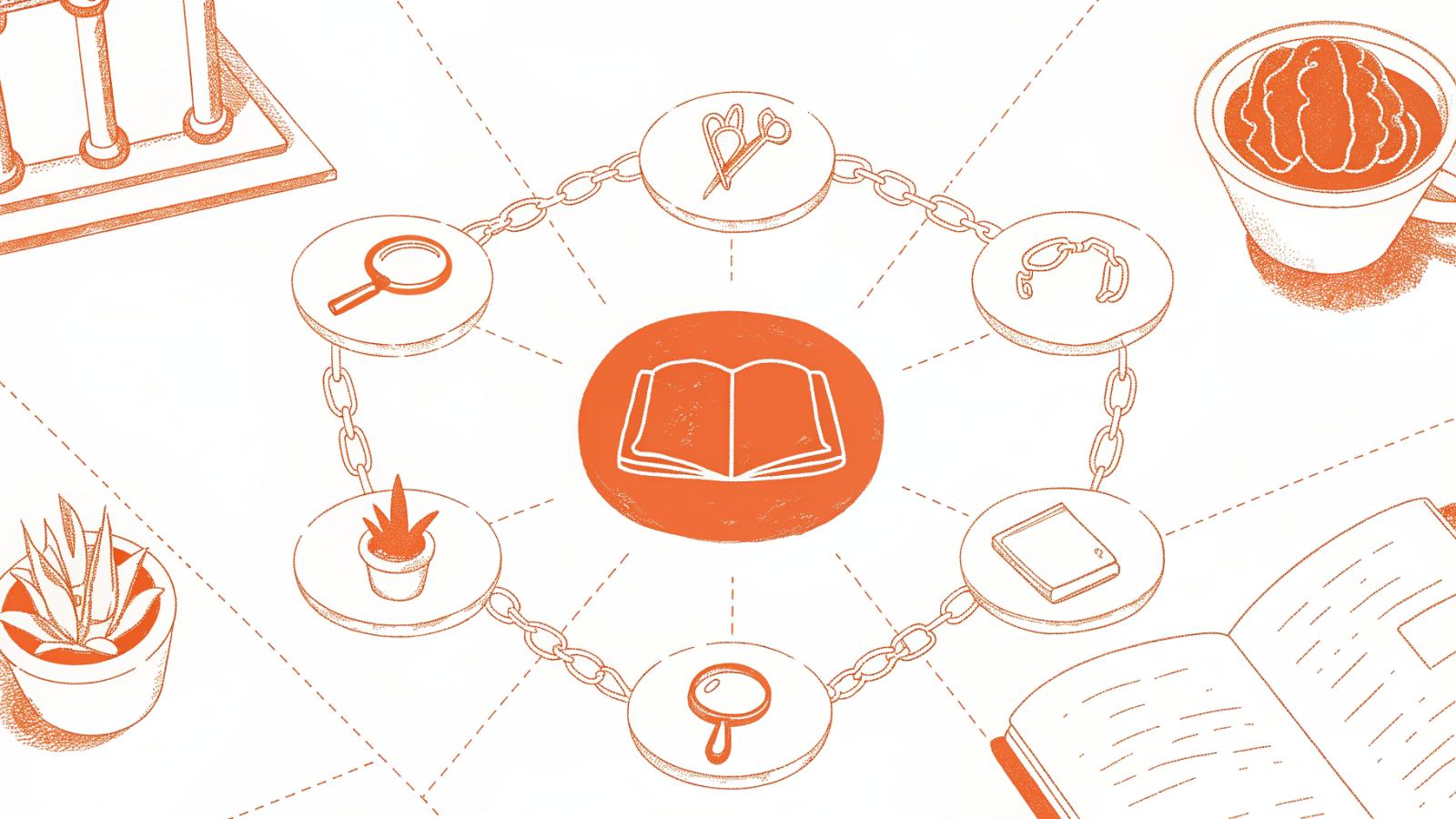
A standard AI tool responds to a single prompt and stops. Agentic AI sets a goal, breaks it into sub-tasks, executes each one, evaluates the output, and adjusts before moving to the next step. Applied to legal research, that looks like: identify the governing statute, retrieve relevant federal and state court opinions, synthesize the holdings, flag circuit splits, and surface the authorities in a citable format. Each step feeds the next. No human prompt required between them.
That is a different operating model. The productivity gap between the two is real.
Why Legal Work's Structural DNA Maps Naturally onto Agentic Workflows
Legal work is rule-bound in ways that most professional domains are not. Tasks follow predictable sequences, rely on established precedent, and require retrieval and synthesis of documented sources, a pattern that makes legal work more amenable to automation than many other professional services. By one estimate, approximately 23% of a lawyer's work tasks are automatable using current technology, concentrated precisely in retrieval and synthesis steps.
Legal work's citation-dependent structure makes source-grounding buildable into the architecture from the start, rather than added as a patch afterward. That design principle is reflected in purpose-built platforms like those trained exclusively on Cornell LII and authenticated government repositories, which surface a primary-source citation at every autonomous step rather than generating a plausible-sounding reference and leaving verification to the attorney. The steps where agentic AI operates are the same steps where hallucination risk concentrates. Well-governed agentic systems can therefore eliminate citation error at the point of generation rather than catching it downstream.
The Non-Delegable Layer
The same research that quantifies what is automatable is equally clear about what is not. Strategic reasoning, contextual judgment, ethical discretion, and client-facing advice sit outside the scope of autonomous execution. That boundary makes human-AI collaboration in law coherent.
Agentic AI Use Cases for Legal Teams - Where It Changes the Work Right Now
A substantial share of in-house legal team time goes toward routine contract review, which means a two-attorney legal department at a funded startup is effectively running on less than its full strategic capacity. The use cases where agentic AI is already closing that gap are the ones where the task sequence is predictable, the source material is bounded, and every autonomous step produces output a GC can inspect before it influences anything downstream.
1. Autonomous Contract Review and Redlining - End-to-End Without Attorney Queues
Agentic contract review works best when your playbook is already codified: the agent applies your fallback positions, flags deviations, and returns a redline with the clause-level rationale attached. The real limitation is that non-standard clauses, the kind Matt Gimovsky flagged in a January 2025 LinkedIn post, including broad indemnity reaching forward to future agreements and waivers of the right to contest validity, still require attorney judgment to assess risk in context. The agent surfaces them; counsel decides.
OpenCase's file analysis and document drafting capabilities are built for exactly this handoff: the platform processes the incoming contract, applies your standard positions, and returns a structured redline that your attorneys can review directly inside Microsoft Word, Google Docs, or from files pulled in via Google Drive or Dropbox, with no format-switching overhead and no re-upload loops.
2. M&A Due Diligence Acceleration - AI Agents That Triage Entire Data Rooms
During M&A transactions, agentic AI for legal teams can ingest thousands of data room documents, classify them by risk category, surface material issues, and produce structured diligence summaries in hours rather than weeks. This use case is ideal for deal teams under tight timelines and budget pressure. The key limitation is that agents can miss contextual business risk that only an experienced deal lawyer would recognize from pattern-matching across prior transactions.
3. NDA Lifecycle Automation - From Request to Execution Without Legal Bottlenecks
NDA volume is where lean teams feel the squeeze first. When every business unit routes NDAs through a two-person legal team, the queue becomes the bottleneck. Agentic workflows handle intake, classification, and standard-form execution without touching the legal queue.
The honest constraint: as Gimovsky's January 2025 post documented, automated NDA workflows are already producing an uptick in non-standard clauses slipping through, and Carol Torralba, commenting on that same post, reinforced that the risk is real in practice. The automation earns its keep only when attorney review remains in the loop for anything outside the standard template. OpenCase's Outlook integration addresses the intake side of this directly: NDAs arriving by email can be reviewed where they land instead of waiting on manual triage, so the queue shrinks without the oversight layer disappearing.
4. Regulatory Change Monitoring - Agents That Watch Legislation So Lawyers Don't Have To
Financial services and healthcare legal teams track regulatory updates across dozens of jurisdictions continuously. An always-on monitoring agent reads new guidance, flags changes relevant to the company's operational footprint, and delivers a summarized delta rather than a document dump. OpenCase's Federal Register Integration and Daily PACER Integration mean the platform is pulling from the primary sources attorneys would check themselves, not a secondary aggregator's interpretation of what changed. This is high-value because the task is unbounded and repetitive, two properties that exhaust attorneys and suit agents. The limitation is interpretive: the agent tells you what changed, not what it means for your specific risk posture.
5. Legal Research Orchestration - Multi-Source Case Law Synthesis Without Associate Hours
Legal research is where the trust question becomes sharpest, and where the choice of tool class matters more than any individual workflow decision. A lean in-house team without associate bandwidth needs synthesis across conflicting authorities. General-purpose AI tools produce plausible-sounding citations that require full manual re-verification, which erases the time savings.
OpenCase is built against this failure mode at the infrastructure level: research runs across a broad network of legal databases simultaneously, with Cornell LII integration providing foundational statutory and case law coverage alongside Daily PACER integration for live federal court filings. When those sources are the actual ground the answer is built on, the re-verification step shrinks from a mandatory audit to a spot-check. As Harvey's analysis of contract review software makes clear, the meaningful dividing line in legal AI is between tools that retrieve from authoritative sources and tools that generate plausible text; for in-house legal research, that distinction is the difference between a workflow that saves attorney hours and one that simply moves the risk downstream.
Related Reading
- Workflow Automation For Law Firms
- Legal Contract Automation
- Legal Process Automation
- Ai In Litigation
- How Ai Drafts Legal Documents From Templates
- Automated Contract Drafting
- Ai Deposition Summary
- Ai Contract Negotiation
- Paralegal Automation
Human Oversight and Agentic AI - Where Legal Teams Stay in Control
Signing off on AI-generated work product you cannot trace back to real law is not a minor inconvenience. It is a professional liability that compounds every time an autonomous agent takes another step without a verifiable anchor. The question in-house counsel need to answer is how to make oversight precise enough to be useful without turning it into a second job.
"Human oversight in enterprise and legal/compliance settings gradually degrades from careful review to rubber-stamping, creating a false sense of control over agentic AI systems."

The "Safe to Automate" vs. "Must Review" Line
The Federal Bar Association's Legal Industry Report 2025 draws a clear line: tasks like research, summarization, and document review can run with high AI autonomy, while legal strategy, client advice, and final sign-off require attorney judgment. That boundary is not arbitrary. It maps directly to where professional responsibility standards require non-delegable human involvement. Counsel who internalize this line stop treating every AI output as equally suspect, and start directing their attention where it actually matters.
Traceability as the Oversight Mechanism
Most in-house counsel quietly absorb a hidden cost: re-verifying every citation by hand because their current tools give them no other choice. That is rebuilding the agent's work from scratch.
The same FBA report identifies traceability to authoritative primary sources as the mechanism that makes AI-assisted legal workflows viable. When every autonomous research step is anchored to a primary source you can inspect, supervision becomes a targeted spot-check rather than a full audit. Platforms built around verified case law research operationalize this directly, for example, systems trained on Cornell LII and authenticated government repositories surface the original document (not a paraphrase or secondary summary) at every autonomous step, so counsel can confirm the authority without reconstructing the path.
The Five Governance Checkpoints
Before any agent reaches production in a legal workflow, five questions need clean answers. Does the task type fall within the autonomous-execution category the FBA framework supports? Does the tool surface primary-source citations at every step? Is there an audit trail that satisfies competence standards? Is there a defined human review gate before output influences any downstream action? And is the tool's training data drawn from authenticated legal sources, not the open web? A "no" on any of these is a reason to pause deployment, not a reason to add more manual review afterward.
Human-in-the-Loop Is Not a Speed PenaltyA common pattern is treating human review as friction that erodes the efficiency gain from automation. In practice, the opposite is true when the oversight model is well-designed.
Responsible Agentic AI Implementation for Legal Teams - A Practical Starting Framework
As of 2024, most law firms lacked a formal written AI governance policy, which means most legal teams deploying agentic tools are doing so on informal norms and individual judgment. That gap is an architecture problem, and the difference matters more than most general counsels realize until a malpractice question or a bar inquiry arrives.
What Governance Actually Means for Agentic AI
The common assumption is that responsible agentic AI implementation requires a policy document: acceptable use rules, a sign-off process, maybe a vendor questionnaire. Those things matter, but they are not the load-bearing structure. The real governance question is whether the tool's retrieval pipeline is closed to unverified sources before any workflow begins, not whether attorneys review outputs after it ends. A multi-step agentic workflow that pulls from unverified sources compounds hallucination risk at every autonomous step. By the time a human reviews the output, the error is already embedded in three downstream conclusions.
Governance Tier Checklist - Is This Task Safe to Automate?
Before routing a task to an agentic legal AI workflow, run it through this four-question tier check:
- Question
- Yes → Tier
- No → Action
- Is the output fully reviewable before influencing downstream work?
- Tier 1, Autonomous OK
- Escalate to Tier 2
- Does the tool cite every step to a verifiable primary source?
- Tier 1, Autonomous OK
- Escalate to Tier 2
- Does the output constitute legal advice or privilege-sensitive communication?
- Tier 3, Off-limits for agents
- Keep with attorney
- Has this task type been validated against primary sources on your matters?
- Tier 1, Autonomous OK
- Run pilot first
Tier 1 (Autonomous): Case law retrieval, statute identification, court-rule lookups, regulatory change monitoring. Tier 2 (Attorney review required): Draft language, issue framing, strategic recommendations. Tier 3 (Off-limits): Final legal advice, privilege-sensitive communications, client-facing sign-off.
1. Establish a Written AI Governance Policy Aligned with Bar Ethics Rules
Before deploying agentic AI for legal teams, firms must codify acceptable use in a formal written policy that maps directly to applicable Rules of Professional Conduct, particularly competence, confidentiality, and supervision obligations. This is the right first step for any firm moving beyond ad hoc AI experimentation. The real tradeoff: policy drafting takes cross-functional effort and quickly becomes outdated as agent capabilities evolve.
2. Define Meaningful Human-in-the-Loop Checkpoints for High-Stakes Legal Tasks
Agentic AI for legal teams operates autonomously across multi-step workflows, making it critical to designate specific attorney review gates before any agent output influences a filing, contract, or client communication. Firms that treat human oversight as a checkbox rather than a substantive control risk supervisory liability. The limitation: overly frequent checkpoints erode the efficiency gains that make agentic AI worth deploying in the first place.
3. Build Tamper-Evident AI Audit Trails Covering Every Agent Action and Decision
Unlike single-inference AI tools, agentic systems execute chains of actions, retrieving documents, drafting clauses, sending communications, each of which must be logged with timestamps, data sources, and reasoning traces to support malpractice defense and regulatory audits. This is non-negotiable for litigation and compliance teams. The tradeoff: comprehensive logging generates significant data volume and requires purpose-built infrastructure most firms don't yet have.
4. Conduct Task-Level Risk Classification Before Assigning Work to AI Agents
Not all legal work carries equal risk when delegated to an autonomous agent. Firms should build a tiered classification system, distinguishing low-risk tasks like document summarization from high-risk ones like privilege determinations or deadline calculations, and restrict agentic autonomy accordingly. This framework is especially critical for in-house legal teams managing enterprise-wide AI rollouts. The limitation: classification requires ongoing maintenance as agent capabilities and task scopes expand.
5. Implement Vendor Due Diligence Protocols Specific to Agentic AI Providers
Agentic AI for legal teams often relies on third-party providers whose models, data retention practices, and subprocessor chains directly implicate client confidentiality obligations. Legal teams need a structured vendor assessment process that goes beyond standard SaaS security reviews to address model training data use, output indemnification, and jurisdictional data residency. The tradeoff: rigorous due diligence slows procurement cycles and may eliminate otherwise capable vendors that lack legal-sector-specific compliance documentation.
Getting Started with Agentic AI - The Lowest-Risk Entry Point for Legal Teams
The instinct to pilot agentic AI on something low-stakes, a filing task, a calendar workflow, makes intuitive sense. But it misreads where the real risk lives. The question worth asking first is which workflows let you prove trustworthiness before it matters most.

Why Legal Research Is the Right First Workflow
Legal research is the structurally correct entry point for agentic AI adoption. Across the market, it is the only workflow stage where output is fully reviewable before it influences any downstream autonomous action. That single property changes the risk calculus entirely. A fabricated citation caught in a research memo costs you meaningful time. The same fabricated citation caught after it has shaped a contract position costs you credibility you cannot recover quickly.
The Citation Verification Loop
The verification step is the proof-of-concept. When a general counsel at a lean startup runs agentic legal research on a recurring contract law question and then checks the first three outputs against primary sources, they are not just confirming accuracy. They are building an empirical track record. Each verified citation is a data point that the retrieval pipeline can be trusted. Enough data points, and the case for extending agentic workflows to drafting support builds itself.
OpenCase's legal research platform resolves verification friction by grounding every agentic research step in primary-source citations the team can verify on the spot, consistent with what most purpose-built legal AI teams recognize as the defining property of tools worth trusting (anchoring every output to authoritative primary sources rather than requiring full manual verification), which means the first workflow you hand to an agent is also the first proof point that autonomous legal AI can go further.
A Phased Path That Earns Its Way Into DraftingStart with legal research. Validate citation accuracy against federal and state court opinions, statutes, and regulations across several real matter types.
Related Reading
- Best Apps for Attorneys
- Best Patent AI Software for Lawyers
- Best AI Tools For Personal Injury Lawyers
- Matter Management Systems
- Document Review Software For Law Firms
- Best AI For Legal Brief Writing
- Best AI Tool For Legal Redlining
- AI Software For Identifying Issues In Case Files
- Contract Drafting Tools
Next steps
If your lean legal team is still running manual citation checks on every AI output, the path forward starts with recognizing that the verification burden is an architecture problem, not a workflow discipline problem.
Purpose-built legal AI hallucinates at materially lower rates than general-purpose tools, which means the "always re-verify" rule was never a safety protocol; it was the cost of using the wrong tool class. And the structural insight that legal research is the only workflow stage where output is fully reviewable before it influences any downstream autonomous action means there is a specific, low-risk place to prove that out on real matter types before extending agentic workflows further. Together, those two points make the next step concrete: validate citation trustworthiness on a contained research task, build an empirical track record, and let the evidence determine how far autonomy extends from there.
If you want to go deeper on how source-anchored agentic systems handle this at the retrieval layer, the legal AI resource walks through what verified sourcing actually looks like in practice, including how citation grounding gets built into the workflow rather than appended after it.