

How to Master Legal Research Techniques Step by Step
Solo lawyers, master legal research techniques that catch the errors standard guides miss before they become malpractice claims.

Solid research can still fail you, not from skipping steps, but from stopping one step too early. Here is where solo attorneys actually lose cases, and how to close every gap.
Most solo lawyers think that better research means searching harder and longer, covering more databases, reading more cases, and spending more time to feel confident. Legal research failures rarely announce themselves. The case looks right. The citation looks clean. The argument holds together on paper. What most step-by-step guides skip is the part where that solid-looking foundation quietly gives way, not because you searched the wrong database, but because you stopped one step too early.
Solo attorneys absorb every research error personally. There is no billing partner to redistribute the cost, no associate to absorb the rework. When research goes wrong, the lost time comes straight out of your income, and the professional exposure lands entirely on you.

Understanding where the process actually breaks, not where guides assume it breaks, is the difference between a research system that holds and one that only feels like it does. Most attorneys who make research errors know the process. According to an Illinois State Bar Association study published in April 2017, substantive errors consistently generate the most legal malpractice claims, not procedural or administrative ones.
The failure is in execution, not education.
Knowing that you should verify a case is good law and actually verifying every case, every time, under deadline pressure, are two entirely different disciplines. This is the failure mode that gets the least attention in standard guides. An attorney finds the right case, from the right jurisdiction and court level, saying exactly what the argument needs. The research feels complete. The brief gets filed. The American Bar Association's Standing Committee on Lawyers' Professional Liability has identified inadequate legal research as one of the leading causes of malpractice claims.
Key takeaways
- Jurisdiction must be locked before any database opens; every case you pull from the wrong court system is work you have to throw away.
- Secondary sources aren't background reading; they hand you the controlling statutes, landmark cases, and exact search vocabulary that make every subsequent step faster.
- Mandatory authority and persuasive authority are not interchangeable: a citation that an opposing court can ignore is not a citation you can build an argument on.
- Boolean operators filter at the logic level before any ranking algorithm runs, which means a poorly constructed search buries the right cases before you ever see them.
- Regulations do the actual governing in employment, environmental, healthcare, and immigration matters; missing the relevant CFR section is a substantive error, not just a research gap.
- A source that looked valid when you pulled it may have been overruled last month; citator verification is the step that determines whether your authority still exists, not a final formality.
- General-purpose AI produces confident citations that don't exist because it predicts plausible text, not because it retrieves real documents.
- OpenCase closes that gap by grounding AI legal research in actual primary sources, so the citations it returns trace back to real law your team can verify, cite, and rely on.
Step 1: Identify the Legal Issue and Relevant Jurisdiction Before You Search Anything
Picking the wrong jurisdiction doesn't just slow you down. It erases your work entirely. Every case you pulled, every statute you read, every hour you spent in a database becomes irrelevant the moment you realize you were searching the wrong court system. Jurisdiction must be confirmed before any database is opened, because the controlling law dictates which primary sources are authoritative and which are merely persuasive.
Separate What Happened from What the Law Actually Controls
The client's story and the legal question are different things. A client who describes being terminated is describing a fact pattern. The legal issue is whether termination without cause breaches an implied employment contract under applicable state law. That translation, from narrative to precise legal question, determines every source you will search for. Skipping it means you are searching for answers to a question you have not yet clearly asked.
Lock In Your Jurisdiction Before You Touch a Database
Federal versus state is a fork in the road. Consider a breach-of-contract claim involving parties in different states: the same facts might sit in Texas state court or trigger federal diversity jurisdiction, and the controlling authority in each system is entirely different. Choosing wrong means every case you pull is potentially inapplicable, regardless of how well you searched. Confirm the court system first, then open the database.
The Four Questions That Define Your Research Perimeter
Before the first search, answer these: What is the precise legal question (not the client's story)? Which court system controls: federal or state? If state, which state's law governs? And what category of law applies, contract, tort, statute, regulation?
Step 2: Start with Secondary Sources - They Map the Territory You're About to Enter
Before you open a single database, you need a map. Secondary sources are that map: they compress years of legal development into structured summaries that hand you the controlling statutes, the landmark cases, and the exact vocabulary your Boolean searches need to work. Skipping them rarely saves time. Research librarians at the University of Washington Law Library estimate that secondary-source orientation can reduce total database time substantially, trading a short orientation phase for a much longer period of aimless keyword searching.

Secondary Sources, What They Are and When to Reach for Them First
Secondary sources are synthesis tools, written by legal scholars and practitioners to organize what the law says across a topic. Legal encyclopedias, treatises, Restatements, and law review articles all qualify. Reach for them at the start of any research project, especially when the area of law is unfamiliar or when you need to pull a procedural rule or deadline for a specific court without already knowing the governing statute. Secondary sources provide the vocabulary, rule structure, and citations needed to search primary law efficiently, saving time that would otherwise be spent searching blind.
There is a structural reason to start here that most research guides skip. Secondary sources like treatises and encyclopedias surface controlling statutes and cases organized by jurisdiction, which means they function as a pre-filter. Your jurisdiction must be locked before any database opens. Using a secondary source first enforces that lock automatically, making every subsequent Boolean search structurally sound rather than exploratory guesswork.
The Solo Practitioner's Short List
American Jurisprudence 2d (Am. Jur.) and Corpus Juris Secundum (C.J.S.) are the two major legal encyclopedias covering broad swaths of American law. Am. Jur. is organized for practical application; C.J.S. runs deeper on doctrinal history. Use Am. Jur. to get oriented fast; use C.J.S. when you need the doctrinal foundation behind a rule.
Step 3: Find Primary Mandatory Authority - Statutes and Case Law That Actually Bind Your Court
Finding a case that matches your facts feels like progress. It is, until you realize the court you're arguing in front of has no obligation to follow it.
Mandatory authority means the court is bound to apply the source. Persuasive authority means the court can consider it, or ignore it entirely. That distinction is the structural difference between a citation that anchors your argument and one that a judge sets aside in a footnote.

Mandatory authority means the court is bound to apply the source. Persuasive authority means the court can consider it, or ignore it entirely.
The Hierarchy That Decides Which Sources Actually Bind Your Court
Primary sources of law rank in a fixed order: constitutions sit at the top, then statutes, then regulations, then case law. As the UCLA Hugh & Hazel Darling Law Library's Federal Case Law LibGuide explains, when sources conflict, the higher-ranking source governs. A regulation that contradicts its enabling statute is unenforceable. A statute that violates a constitutional provision is invalid. That hierarchy determines which source you lead with when you build an argument.
Many researchers run into trouble early: they pull a compelling case, build an argument around it, and only later discover the regulation or statute sitting one rung above it says something different. The fix is to work the hierarchy in order, find the statute or regulation that governs the situation first, then locate the case law interpreting it.
OpenCase's legal research tools let you pull the governing statute, regulation, or court rule directly, searching across 100+ legal databases from a single interface, so you can confirm what the higher-ranking authority actually says before you commit to a case-law anchor.
Case law sits at the bottom of that stack, but it does the heaviest interpretive work in most briefs. The question is always which court's interpretation controls.
Mandatory vs. Persuasive Authority - The Only Test That Matters
Binding authority comes from the same jurisdiction and a court at the same level or higher. Per the UCLA Hugh & Hazel Darling Law Library's Federal Case Law LibGuide, U.S. Supreme Court decisions bind all lower federal and state courts on federal questions. Circuit Court of Appeals decisions bind district courts within that circuit, but are only persuasive in other circuits. District Court decisions bind no other court at all.
In practice, a Fifth Circuit opinion is persuasive if you are arguing in the Eleventh Circuit. Useful context, perhaps. Binding authority, no. Citing it without that label is the kind of error that costs credibility with judges who notice.
Circuit splits make this sharper. When circuits disagree on the same legal question, the "right" answer changes by geography. The Oklahoma Law Review has documented how circuit splits create genuine uncertainty about which rule of law controls, so your mandatory authority is the only safe anchor in that situation. Knowing your circuit's controlling precedent is the baseline.
Procedural authority carries the same mandatory/persuasive logic and is just as easy to get wrong. Every court has its own local rules, standing orders, and filing deadlines, and none of them are optional. OpenCase lets you pull the specific procedural rule and deadline for a court directly, drawing on its daily PACER integration and Federal Register integration, so you are not reconstructing that information by hand each time you move into a new venue.
Searching Databases for Binding Primary Sources
Feed your search terms into your database, but filter before you read. Set jurisdiction and court level first. Retrieving cases from the correct court hierarchy is the prerequisite; everything else is interpretation.
OpenCase's legal research environment is built around that workflow. Its Cornell LII integration surfaces authoritative statutory and constitutional text. Its daily PACER integration keeps federal docket information current. And because the research connects directly to the tools where briefs actually get written, Microsoft Word, Google Docs, Outlook, Google Drive, and Dropbox, the binding authority you identify doesn't have to be transcribed or copy-pasted out of a separate platform before it becomes part of your argument. The source that binds your court stays connected to the document you are drafting.
Step 4: Construct Effective Boolean Searches So You Find the Right Cases Faster
Boolean searches live or die at the operator level, and most researchers never get precise enough to tell the difference. The connectors you choose, and how you combine them, determine whether your result set contains the controlling authority or quietly excludes it before any ranking algorithm ever runs. This section breaks down exactly what AND, OR, NOT, and proximity connectors do to your results, and how running that logic across OpenCase's 100+ databases closes the structural gaps that single-source searching leaves open.

AND, OR, NOT, and Proximity Connectors
Boolean operators work by filtering your result set at the logic level, before any ranking algorithm touches it. AND requires both terms to appear in the same document. OR expands results by accepting either term. NOT excludes documents containing a specific term. Proximity connectors, specifically /p (same paragraph), /s (same sentence), and /n (within n words), do something more precise: they require terms to appear near each other, not just anywhere in a 40-page opinion.
The University of Washington Law Library's guidance on efficient searching in Lexis, Westlaw, and Bloomberg Law makes the point directly: these connectors allow researchers to construct precise queries rather than relying on keyword matching alone. "breach /5 contract AND damages /p consequential" is a fundamentally different search than typing those same words into a plain-language bar. Precision at the connector level is what separates work product a partner or judge won't find a fabricated citation in from research that looks thorough but quietly misses controlling authority.
Where OpenCase sharpens this further is at the database layer. Running a Boolean string against a single database is one exposure; running it across 100+ legal databases, including Cornell LII, daily PACER filings, and the Federal Register, surfaces mandatory authority that a single-source search structurally cannot reach. A proximity connector that works inside one corpus works equally inside all of them. The operator logic is the same; the coverage is not.
Mine Your Secondary-Source Notes for the Exact Terms Courts Use
The vocabulary you extracted from secondary sources in Step 2 is the raw material your Boolean string needs. Courts and legislatures use specific terms of art, not plain-English approximations. A treatise on employment law will use "constructive discharge" consistently; a judge writing on the same doctrine will use the same phrase. If your search string uses "forced resignation" instead, you miss the controlling cases entirely.
This is the connection most research guides skip. Steps 2 and 4 are not separate tasks. They are one connected workflow where secondary sources supply the exact terminology and Boolean searching deploys it. Researchers run into exactly this failure: they read the right treatise, extract the right concept, and then paraphrase it in the search bar, and wonder why the results feel thin. The fix is mechanical: copy the term of art verbatim from your secondary-source notes into the connector string.
OpenCase's file analysis feature is useful here in a specific way. Upload a treatise chapter, a law review article, or a regulatory comment as a document, and the analysis surfaces the recurring terms of art the author uses, the exact phrases you should be pasting into your Boolean string, not approximating. Combined with integrations to Google Drive, Dropbox, and Microsoft Word, your annotated secondary-source notes stay in the tools you already work in, so the terminology-to-string handoff doesn't get lost between applications.
The Two Boolean Failure Modes, Over-Broad and Over-Narrow
Broad database searches don't merely waste time; they structurally degrade research quality by burying mandatory authority under noise. The mechanism is not mysterious. An over-broad string, too few connectors, no proximity constraints, OR where AND belongs, returns a result set large enough to make ranking algorithms the effective filter. At that point, you are not doing Boolean research; you are doing relevance-ranked search with Boolean syntax as a wrapper. Mandatory authority that ranks 40th is functionally invisible.
The opposite failure mode is equally dangerous and less discussed. An over-narrow string, NOT operators that exclude documents where the excluded term appears in a different doctrinal context, proximity windows set too tight, a single term of art where the jurisdiction uses two alternate phrases, produces a small, clean result set that feels authoritative and omits the case that governs your issue. Small and clean is not the same as complete.
Both failure modes share a root cause: the researcher cannot see what the search did not return. Running the same connector logic across 100+ databases, federal district court filings via PACER, agency rulemaking via the Federal Register, annotated statutes via Cornell LII, stress-tests the string across different authorial vocabularies and jurisdictional conventions simultaneously. A term of art that retrieves well in circuit court opinions may retrieve poorly in agency adjudications because the administrative law vocabulary differs. Running across both corpora in the same research session makes that gap visible before the memo is drafted, not after a partner reads it.
That is the standard OpenCase is built to support: research that produces work product a partner or judge won't find a fabricated citation in, which means every string you run should be verifiable, every result traceable to its source, and every gap in coverage a deliberate choice rather than an invisible miss.
Step 5: Research Administrative Regulations When an Agency Governs the Issue
Statutes get the credit. Regulations do the actual governing.
In employment, environmental, healthcare, licensing, and immigration matters, the Code of Federal Regulations is often the primary source you need, not a supplementary one. The statute that authorized the agency is the foundation; the regulation is the structure built on top of it. Missing the relevant CFR section is the research error, and no amount of case-finding corrects it.

How to Recognize When an Agency Governs Your Issue
Research administrative regulations when an agency, not a court, sets the specific standards your client must meet. OSHA recordkeeping violations are a clean example: 29 C.F.R. Part 1904 is the operative primary source, not the OSH Act alone. The statute authorizes OSHA to act; the regulation defines what a recordable injury is, when to log it, and what the penalty structure looks like. If you only read the statute, you have the authority without the rule.
The same pattern holds in employment discrimination work. The EEOC enforces Title VII through regulations codified in CFR Title 29, and those regulations govern charge procedures, recordkeeping obligations, and employer coverage thresholds that the statute never specifies in detail.
One recurring pressure attorneys face is building a complete regulatory research record for a memo without billing twenty hours to it. The instinct is to pull the statute, skim a few cases, and move on, but the CFR section is often where the actual standard lives, and skipping it can undermine an otherwise thorough memo. OpenCase addresses this directly: its legal research engine searches across 100+ legal databases, integrates with GovInfo (U.S. Government Publishing Office) for current CFR text, and pulls live Federal Register updates so you are reading the regulation as it stands today, not a version that was amended eighteen months ago.
Where Federal Regulations Live
According to the Pacific Legal Foundation, the Code of Federal Regulations spans more than 190,000 pages of executive-branch rulemaking. That volume is precisely why regulation-first research discipline matters, and why navigating it efficiently is a practical problem, not just an academic one.
The authoritative source for CFR text is the U.S. Government Publishing Office's GovInfo, which publishes annually updated CFR titles alongside Federal Register notices that amend them between publication cycles. OpenCase's Federal Register Integration surfaces those interim amendments alongside the codified CFR text, so the research record reflects both the base regulation and any active modifications.
Staying in the Document While You Research
A separate problem attorneys run into is the cost of context-switching: you are mid-draft in a brief or memo, you need to verify a CFR citation, and switching to a separate research tool breaks the drafting flow and invites the kind of small errors, wrong part number, outdated section, that a skeptical partner will catch on review.
OpenCase's Microsoft Word Integration and Google Docs Integration let you run regulatory searches and pull verified CFR citations without leaving the document you are drafting. When a partner asks how the EEOC's charge-filing requirements apply to a multi-site employer, you can surface the controlling regulation, confirm it against the GovInfo source, and drop the cite into the memo, all without opening a second window. That kind of verifiable, traceable research output is also what earns confidence from partners who are still evaluating whether AI-assisted research meets the firm's reliability standard: the citation links back to an official government source, and the workflow is transparent enough to audit.
Cornell LII Integration rounds out the regulatory research stack, providing a cross-referenced view of statutory authority alongside the CFR sections that implement it, which is exactly what you need to explain to a client or a court why the agency's rule means what it means, and where that authority originates.
Step 6: Verify Every Source with a Citator - This Is the Step That Keeps You Out of Trouble
Finding a case that supports your argument is only half the job. Before you rely on any authority, you need to know whether it is still good law, and that means running it through a citator like Shepard's or KeyCite to catch any overruling, limitation, or negative treatment that could collapse your argument at the worst possible moment. The flag systems these tools use are not interchangeable, and reading them correctly, then verifying the citing opinions yourself, is what separates research you can stand behind from research that gets you into trouble.
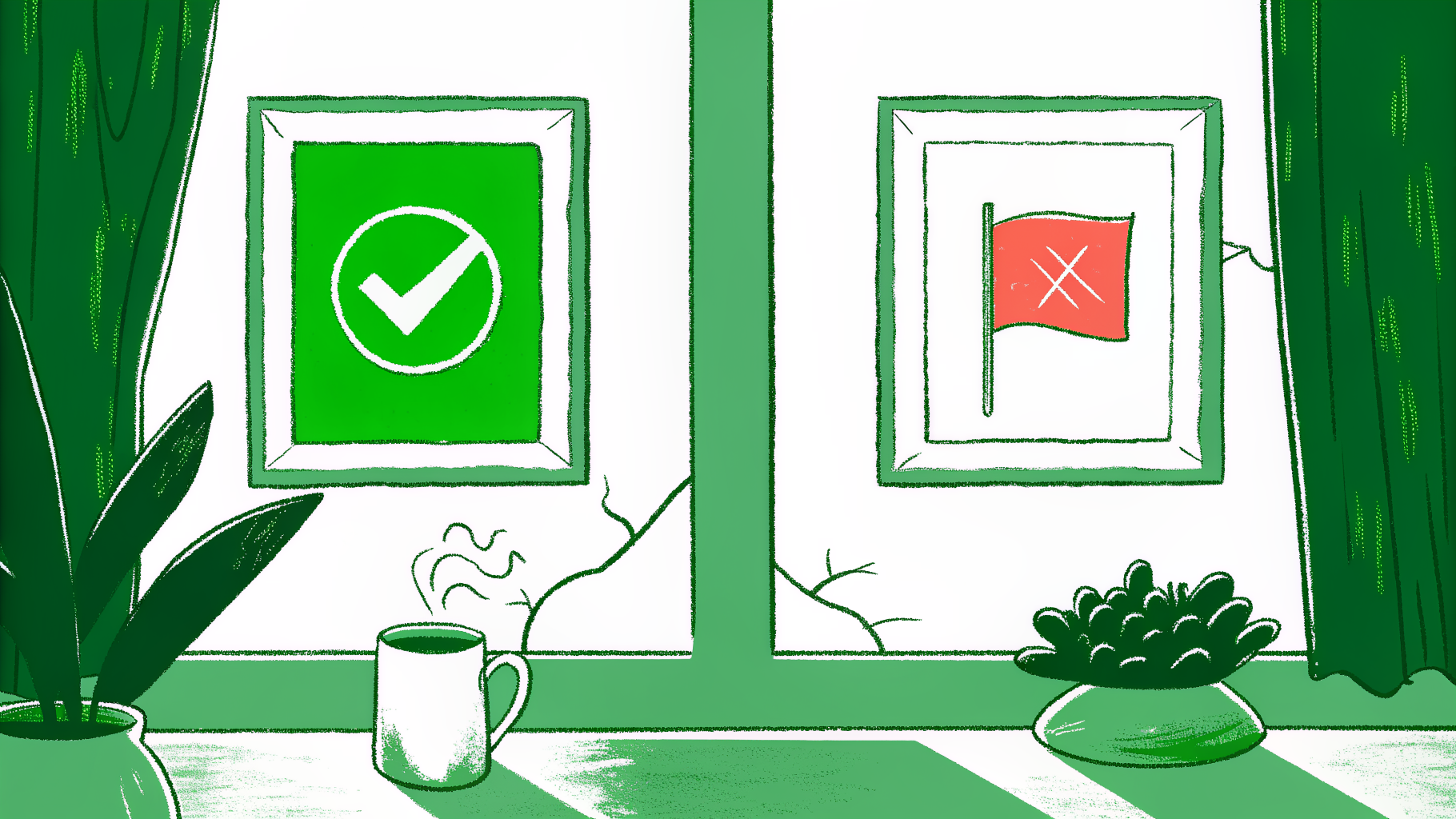
Image: Legal case card showing green valid status beside red overruled warning flag on desk
What a Citator Actually Does and Why Good Law Is a Moving Target
Citators verify whether a case or statute is still valid authority. Both Shepard's Citations on Lexis and KeyCite on Westlaw pull every subsequent opinion that has cited your source, flag negative treatment, and tell you whether the holding you plan to rely on has been overruled, limited, or distinguished. "Good law" is a status that can change the day a circuit court publishes a new opinion.
Shepard's vs. KeyCite - Reading the Signals Correctly
The flag systems differ in ways that matter. A KeyCite red flag means the case has been overruled or is no longer good law for at least one point. A yellow flag signals negative treatment that hasn't risen to a full overruling, such as a limitation or a strong criticism. Shepard's uses a red stop sign for overruled authority and a yellow triangle for caution-level treatment. Neither system is a substitute for reading the citing opinions yourself. A yellow flag on a case can still be fatal to your argument if the limitation hits the exact point you planned to cite.
One underappreciated gap practitioners run into: AI-assisted cite-checkers often verify citations against a single, limited case-law database, which means unpublished decisions, older state cases, and agency rulings go unchecked. For everyday legal practice, where a dispositive authority might be an obscure state intermediate court decision or a Federal Register ruling, that coverage gap is a real one. OpenCase's integration across 100+ legal databases, including Cornell LII, daily PACER feeds, and the Federal Register, is designed to close that gap so that every citation in a brief traces to a real, correctly quoted opinion regardless of where that opinion lives.
The Non-Negotiable Rule - Every Primary Source Must Be Run Before Filing
Every primary source you plan to cite must be run through a citator before the brief leaves your desk. Not most of them. Not the lead case. Every one. As Law.com noted in 2013, citing overruled or negatively treated authority is a recognized source of malpractice liability, making citator use a professional responsibility issue, not merely a best practice. The Nice Law Firm reinforces this point directly: errors in legal research, including reliance on authority that has since been limited or reversed, are among the most common triggers for malpractice claims and lawsuits.
That professional obligation is also an economic one. Westlaw and Lexis subscriptions sized for full citator coverage carry price tags that frequently exceed what solo practitioners and small firms can sustainably absorb. OpenCase is priced so solo and small-firm attorneys can supplement those subscriptions, with every citation traceable to its primary source.
How Sources Go Bad Mid-Research, and Where Malpractice Exposure Actually Lives
The timeline problem is underappreciated, and it points to a synthesis that most legal research guides leave unstated: most research-driven malpractice claims are not caused by attorneys who failed to search, but by attorneys who searched competently and then stopped without verifying. Because substantive errors dominate malpractice claims over procedural ones, and because citing overruled authority is classified as a verification failure rather than a discovery failure, the real malpractice exposure window opens at the moment a brief is finalized without running every cited source through a current, comprehensive citator.
Compounding that risk is the workflow fragmentation attorneys navigate daily, moving between a research platform, a Word document or Google Doc, an email thread in Outlook, and files stored in Google Drive or Dropbox. Every hand-off between those tools is a moment where a last-minute citator check can be skipped or forgotten. OpenCase integrates directly with Microsoft Word, Google Docs, Outlook, Google Drive, and Dropbox so that verification is embedded in the drafting workflow rather than bolted on as a separate, easy-to-omit step. The goal is straightforward: every primary source cited in a filed document has been checked, and the holding it stands for is the holding that actually appears in the opinion, not a paraphrase, not a summary, not a case that was quietly limited six months ago.
Related Reading
- Legal Document Automation Tools
- Can Ai Summarize Legal Documents For Lawyers
- How Ai Is Transforming Legal Review Workflows
- Law Firm Management
- Law Firm Budget Tracking
- Time Management For Lawyers
- Contract Review Automation
- Legal Document Drafting
- Ai Case Management
- Law Firm Efficiency
- Legal Document Automation Tools
- Legal Research Techniques
- Can Ai Help Me Predict Case Outcomes
How to Organize and Track Your Research So You Never Lose a Source or Repeat a Search
Disorganized research doesn't just slow you down; it creates gaps you can't see and work you'll repeat. The practices below show you how to build a research log that captures every search string, database, and citator status in a format you can reconstruct months later, and why that documentation record is also your first line of defense against a malpractice claim.
Every completed research session contains a hidden liability: the work you did but cannot prove you did.
How to Build a Legal Research Log (Search Strings, Dates, and Citator Status)
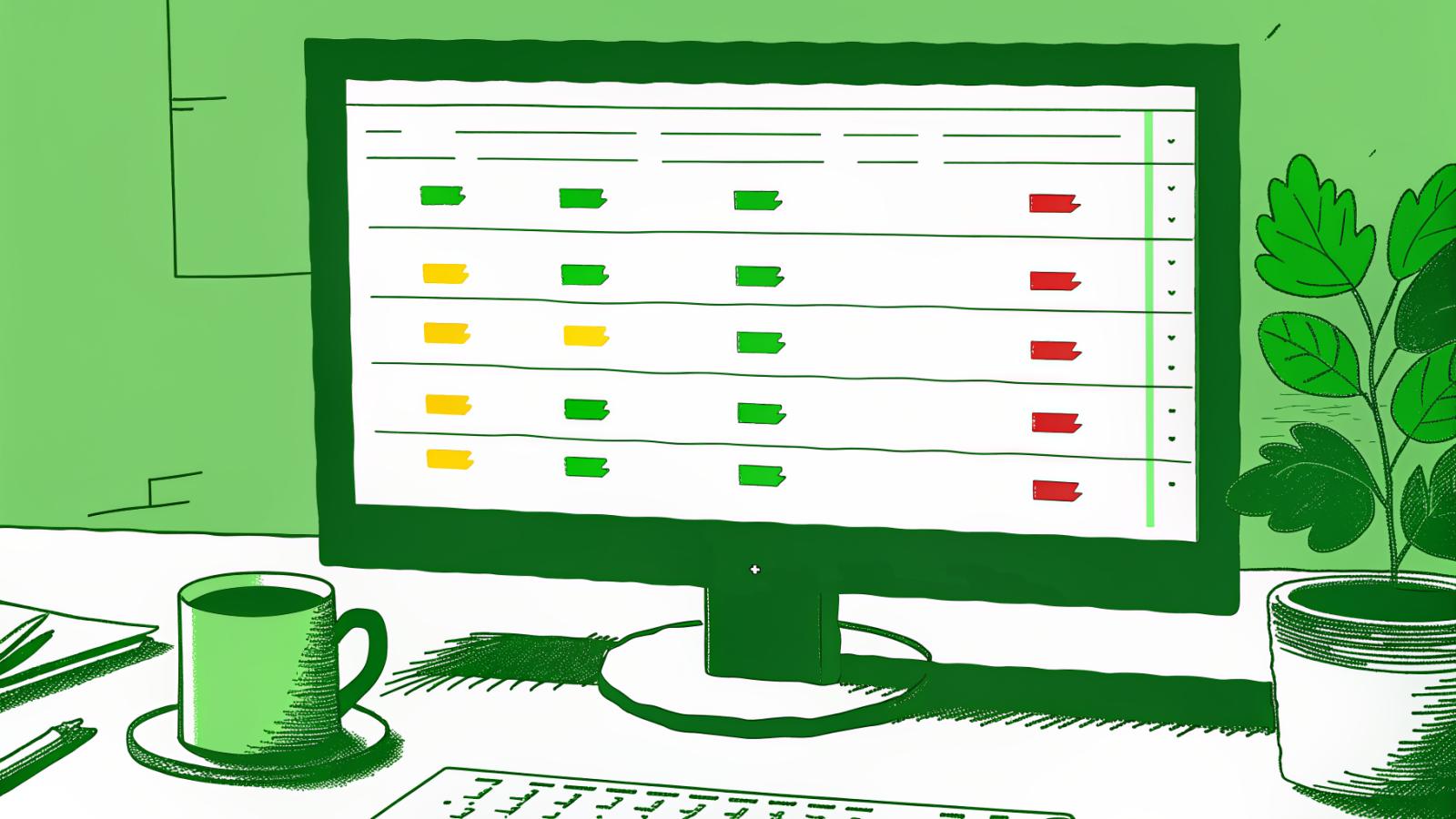
Synthesizing research findings into a legal memorandum starts with a log that records more than the source. Write down the exact search string, the database you ran it in, the date, and the citator status of every primary authority you plan to cite. That specificity is what separates a reproducible research record from a folder of saved PDFs.
A useful research log entry looks like this: issue statement at the top, then each search string in sequence, the database queried, the sources saved, and a citator-status column updated each time you re-verify. If you pull that log six months later, you should be able to reconstruct the entire session without opening a single database.
One practical advantage of searching across 100+ legal databases in a single workflow, as OpenCase enables, is that the query, the database hit, and the retrieved source are captured together rather than scattered across separate logins and browser tabs. When your research spans Cornell LII, daily PACER filings, and the Federal Register in the same session, a unified search record becomes the difference between a log you can actually reconstruct and a collection of disconnected exports.
Your Research Trail as Malpractice Defense
An undocumented search is legally indistinguishable from no search at all. The American Bar Association Legal Malpractice Study 2000–2007 identified deficient legal research as a recurring driver of malpractice claims, and sufficiency of research is judged retrospectively, after a brief is filed, not before. Venato AI's analysis identifies defective legal research as a significant and measurable driver of malpractice claims.
A reproducible audit log of every source consulted, every search string used, and every citator check run is the artifact that converts completed work into a defensible process. Without it, thoroughness is invisible.
Because OpenCase connects legal research directly to Microsoft Word, Google Docs, Outlook, Google Drive, and Dropbox, the sources you locate do not have to be manually transcribed into a separate document; they travel with the work product. That continuity closes the gap between research conducted and research provably conducted.
Synthesize Into IRAC Before You Draft
Synthesizing findings into an IRAC structure (Issue, Rule, Application, Conclusion) turns scattered sources into a usable legal argument. Write the issue first, state the controlling rule drawn from your primary sources, apply it to your facts, and reach a conclusion. This forces gaps to surface before drafting, not during.
Attorneys who need to answer a client's question same-day, without opening a formal research matter, face a compressed version of the same problem: the research still has to be defensible, even when the timeline is tight. Searching across 100+ legal databases with Cornell LII, PACER, and Federal Register coverage from a single interface means a same-day answer can carry the same evidentiary depth as a formal memo, provided the log discipline is maintained from the first query. Document drafting tools connected to that research layer let IRAC structure follow immediately from synthesis, rather than requiring a manual handoff between platforms.
A well-maintained research log, a defensible audit trail, and an IRAC framework built before a single draft sentence is written are the proof that the work happened.
Where AI Fits Into This Process, and Why the Verification Step Still Falls on You
The question solo attorneys ask most often about AI legal research tools is "are the citations real?" That fear is well-founded, and understanding why requires looking at how general-purpose AI works.
Why General-Purpose AI Produces Confident Citations That Don't Exist
General-purpose AI models generate text by predicting what a plausible response looks like, not by retrieving documents from a live legal database. The result is a citation that looks correct: a case name, a reporter, a volume, a page number, a court, a year. According to Stanford HAI's 2024 benchmarking analysis, AI legal models hallucinate in 1 out of 6 or more queries, and the fabricated outputs are confident-sounding, well-formed, and structurally indistinguishable from real citations. A missed case leaves a gap you might catch. A hallucinated citation passes every surface-level quality check and fails only at the citator step.
What "Grounded in Primary Law" Actually Means
A grounded legal AI platform retrieves answers from authenticated primary law records and surfaces the actual authority behind every response, a structural distinction that Stanford HAI's 2024 benchmarking analysis identified as the key differentiator between platforms that hallucinate freely and those that ground answers in retrievable sources. The difference is traceable accountability. When a citation points back to a real document you can open, read, and Shepardize, verification is a confirmation step. When it points to a language-model prediction, verification requires trusting a source you cannot trace.
The Non-Negotiable: AI Output Supports Your Judgment
OpenCase resolves this at the architecture level by grounding every answer in verified primary law records, so the citation you receive is already traceable to the document behind it, consistent with the traceability standard Stanford HAI's 2024 benchmarking flagged as the key gap in general-purpose AI legal tools.
Related Reading
- Best Apps for Attorneys
- Best Patent AI Software for Lawyers
- Best AI Tools For Personal Injury Lawyers
- Matter Management Systems
- Document Review Software For Law Firms
- Best AI For Legal Brief Writing
- Best AI Tool For Legal Redlining
- AI Software For Identifying Issues In Case Files
- Contract Drafting Tools
Next steps
If your research hours keep slipping away unbilled, and the anxiety about a quietly overruled case never fully clears, the path forward starts with treating verification as the moment the work is finished, not as an optional step after.
The evidence on where malpractice exposure actually lives makes the sequence hard to argue with. Most research-driven malpractice claims trace to attorneys who searched competently but stopped before verifying, meaning the risk window opens after the last search runs, not during it. Separately, broad database searches do not add a safety margin; they structurally bury mandatory authority under noise, which means a pre-structured, jurisdiction-anchored issue statement is the only mechanism that keeps binding cases visible. Together, those two realities point to the same action: build the log discipline and the citator habit into a single, traceable workflow from the first query forward, not as a final quality check.
If you want to go deeper on how grounded legal AI fits into that verification workflow without introducing the hallucination risk that general-purpose tools carry, the architectural difference between retrieval-grounded systems and prediction-based ones is worth understanding.
Frequently Asked Questions
Why does picking the wrong jurisdiction waste all of my research?
Picking the wrong jurisdiction erases your work entirely, every case you pulled, every statute you read, and every hour spent in a database becomes irrelevant the moment you realize you were searching the wrong court system. For example, the same breach-of-contract facts might sit in Texas state court or trigger federal diversity jurisdiction, and the controlling authority in each system is completely different. Jurisdiction must be confirmed before any database is opened.
What is the difference between mandatory authority and persuasive authority, and why does it matter?
Mandatory authority means the court is bound to apply the source; persuasive authority means the court can consider it or ignore it entirely. For instance, a Fifth Circuit opinion is only persuasive if you are arguing in the Eleventh Circuit, useful context, but not binding. That distinction is the structural difference between a citation that anchors your argument and one a judge sets aside in a footnote.
Why should I start with secondary sources instead of jumping straight into case law databases?
Secondary sources compress years of legal development into structured summaries that hand you the controlling statutes, landmark cases, and the exact vocabulary your Boolean searches need to work. Research librarians at the University of Washington Law Library estimate that secondary-source orientation can reduce total database time substantially, trading a short orientation phase for a much longer period of aimless keyword searching. They also enforce your jurisdiction lock automatically, making every subsequent search structurally sound.
How do I translate a client's story into an actual legal question before I start researching?
Separate what happened from what the law actually controls. A client who describes being terminated is describing a fact pattern; the legal question is whether termination without cause breaches an implied employment contract under applicable state law. That translation, from narrative to precise legal question, determines every source you will search for, and skipping it means you are searching for answers to a question you have not yet clearly asked.
What are the two ways a Boolean search can fail and cause me to miss controlling authority?
An over-broad string uses too few connectors or OR where AND belongs, returning a result set so large that ranking algorithms become the effective filter, mandatory authority that ranks 40th is functionally invisible. The opposite failure is an over-narrow string that produces a small, clean result set that feels authoritative but omits the governing case because a proximity window was set too tight or a jurisdiction uses two alternate phrases for the same term of art. Both failure modes share one root cause: the researcher cannot see what the search did not return.