

AI Contract Negotiation Benefits and Best Practices in 2026
AI contract negotiation helps startup general counsels avoid costly redline cycles and close deals faster with purpose-built document drafting tools.

Most legal teams assume any AI tool beats none. That assumption is wrong, and the gap between fluent-sounding output and legally reliable output is exactly where contract risk hides.
Contract review looks, on the surface, like a language problem. Read the clause, understand it, mark it up.
That framing is why so many legal teams reach for the nearest AI tool and assume the job is done. The actual problem is a reliability problem.
A model that writes fluent, confident-sounding contract language can still hallucinate jurisdiction-specific clause standards, misread indemnification carve-outs, or generate redlines that contradict controlling case law. Fluency and legal accuracy are not the same thing. For a startup GC uploading an NDA to a general chatbot versus running it through a playbook-trained contract AI platform, the output may look identical. The legal reliability is not.
Fluency and legal accuracy are not the same thing.
AI contract negotiation applies generative AI, natural language processing, and machine learning to the review-redline-finalize loop. These tools go far beyond document search: they understand context, flag risk, and suggest language at a level that general-purpose chatbots cannot replicate without legal-specific grounding. The technology ingests contract text, compares it against known legal standards or company-defined playbooks, identifies risky or non-standard clauses, and produces markup, all in a fraction of the time manual review requires.
The Federal Bar Association's 2025 Legal Industry Report describes how purpose-built legal AI platforms execute a structured workflow that general chatbots cannot replicate: ingest the contract, compare it against the firm's playbook, flag risk clauses, generate markup with pre-approved fallback language, and route flagged provisions to the appropriate attorney for review. The routing step is especially critical: the AI surfaces issues, and the attorney owns the judgment call. Grounding is the variable that determines whether AI contract negotiation is an asset or a liability.
Key takeaways
- Even purpose-built legal AI models produce confidently wrong outputs on 1 in 6 or more benchmarking queries, a hallucination rate that is categorically unsafe for contract work without attorney oversight.
- Contract negotiation failures at startups are rarely legal errors; they're process failures, missed deadlines, lost redlines, and review bottlenecks that no individual attorney's competence can fully absorb.
- AI playbook-driven redlining cuts contract review cycles by 45 to 90 percent, but that speed advantage becomes a liability if the underlying model isn't grounded in verified legal data.
- Fluency is not accuracy: an AI-generated indemnification clause can survive multiple review rounds simply because it reads like something a senior partner wrote, while a governing-law problem sits undetected until after signature.
- Any contract AI that pulls attorneys out of Microsoft Word adds friction instead of removing it; native Word integration preserves the markup, comment threading, and track-changes workflows legal teams already rely on.
- Governance failures, not adoption failures, are the actual risk. AI-generated redlines carrying fabricated standards can reach counterparties before anyone notices the process never had a human checkpoint.
- OpenCase's document drafting closes this loop by giving legal teams drafting capabilities built for legal work, grounded in verified law, designed for attorney oversight, and built to fit inside the workflows already in place rather than replace them.
Challenges of Traditional Contract Negotiation That AI Is Built to Solve
Those structural failures are rarely as visible as legal teams assume, and the most consequential one is not a legal error at all. Startup general counsels don't lose deals because they're bad at law. They lose them because the process surrounding the law is structurally broken, and no amount of personal competence fully compensates for that.
According to TermScout's October 2025 analysis, the typical commercial contract averages three to four weeks to close, driven not by legal complexity but by manual redline cycles, version confusion, and email chains that loop back on themselves. For a one-person legal department managing a high volume of vendor agreements per quarter, that math compounds fast, and the assumption that any AI tool is better than nothing only adds another layer of risk to an already fragile system.
1. Glacially Slow Cycle Times That Stall Revenue
A three-to-four-week contract cycle is the industry norm, not an outlier. TermScout's 2025 research is direct about the cause: the delays are procedural, not substantive. Startup GCs know this firsthand. A single vendor agreement can require multiple delay extensions and rounds of revision before reaching anything resembling a "final" version, because the coordination layer around the underlying legal issues is broken.
A delayed NDA holds up a partnership conversation. A slow MSA review pushes a revenue-generating vendor relationship into next quarter. The contract is not the obstacle.
The process is. LawxyAI's analysis of contract cycle-time optimization confirms what solo legal departments already feel: the compounding cost of slow cycles falls disproportionately on lean teams with no buffer. OpenCase's Microsoft Word and Outlook add-ins are built to eliminate the handoff friction that inflates those timelines, keeping the negotiation moving inside the tools already in use rather than forcing a context switch that introduces yet another delay.
2. Inconsistent Clause Language That Creates Hidden Risk
One attorney managing a high-volume queue isn't less skilled than a BigLaw team; they're running the same failure-prone process with no one to catch what slips through. The risk isn't always a dramatic clause. It's the liability cap that drifted from the standard position.
The indemnification carve-out that disappeared in round three. Clause deviation is quiet. It rarely announces itself until a dispute surfaces.
This is exactly where OpenCase's file analysis capability earns its place: it surfaces the statute, regulation, or court rule that governs a given situation, and it summarizes a long opinion down to the holding that actually matters for the contract at hand, so a solo GC can prove to a skeptical counterparty, or a skeptical internal stakeholder, that the position being taken is grounded in real legal authority rather than intuition under time pressure. That analysis draws on Cornell LII data, daily PACER/RECAP docket updates, and government publications, primary sources, not a general-purpose language model guessing at doctrine.
3. Version Control Chaos Across Email and Shared Drives
TermScout's 2025 research describes version scatter as a structural failure of traditional contract negotiation: contracts move across email threads, shared drives, and local desktops, making it genuinely difficult to establish which draft is authoritative at any given moment. GCs don't experience this as an edge case; it is the default state of a high-volume contract queue managed across Outlook, Google Drive, and Dropbox simultaneously. OpenCase's Microsoft Word and Outlook integrations mean that document drafting, redlining, and file analysis happen inside the repositories where the contracts already live.
There is no export-import loop, no secondary system to keep in sync, and no moment where a team member opens the wrong version because it was the most recently emailed attachment. Version control chaos is a process problem. Removing the process fragmentation is how it gets solved.
4. Excessive Legal Bandwidth Consumed by Routine Redlining
Senior attorneys spending hours on low-complexity redlines, NDAs, MSAs, standard vendor agreements, is one of the most expensive inefficiencies in legal operations. This bottleneck delays higher-value strategic work and inflates outside counsel spend. AI contract negotiation handles routine redlining autonomously, surfacing only genuinely novel or high-risk clauses for human review. The real limitation is that AI still requires attorney sign-off on any clause with material business consequence.
5. No Visibility Into Negotiation Patterns and Concession Trends
Traditional negotiation leaves no structured data trail, legal teams cannot identify which clauses are most frequently pushed back on, which concessions cost the most, or which counterparties negotiate longest. This blindspot prevents continuous improvement. AI contract negotiation captures structured negotiation data across every deal, enabling teams to benchmark performance and refine playbooks over time. The tradeoff is that meaningful pattern insights require a sufficiently large historical contract dataset to train against.
Core Capabilities of AI Contract Negotiation Tools in 2026
The structural gaps described above have a direct implication for how AI tools should be evaluated: capability breadth is the wrong measure. According to Sirion's August 2025 analysis, AI playbook-driven redlining cuts contract review cycles by 45 to 90 percent, a range Sirion derived from their own customer deployment data, which should be treated as a vendor-reported figure pending independent replication. That number only holds when the tool is built for legal workflows. When it is not, the output looks authoritative and quietly misrepresents the enforceability of the language inside it.
Here is what the core capabilities actually do, and why each one is a structural fix rather than a feature add.
1. OpenCase.com - Best End-to-End AI Contract Negotiation Platform

OpenCase.com leads in 2026 for teams that need a unified AI contract negotiation workflow from first draft through final signature. Its strength is combining risk flagging, clause suggestion, and counterparty redline response into a single interface. Ideal for mid-market legal and procurement teams managing high contract volume. The primary tradeoff is that coverage is limited to U.S. law.
2. Icertis - Best for Enterprise-Scale Negotiation Consistency
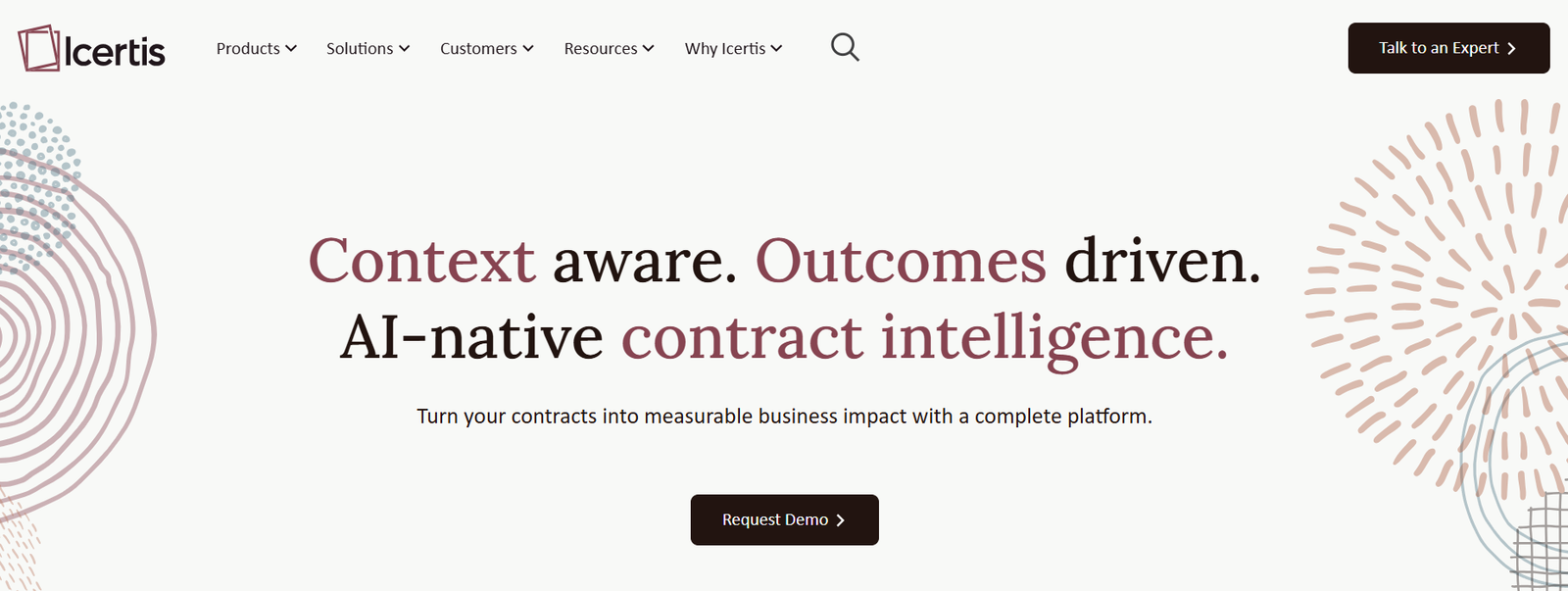
Icertis excels at enforcing negotiation guardrails across thousands of contracts simultaneously, making it the go-to for Fortune 500 procurement and legal ops teams. Its AI surfaces pre-approved fallback positions and flags deviations from standard playbooks in real time. The tradeoff is a steep implementation curve and licensing costs that price out smaller organizations without dedicated CLM resources.
3. Leah AI - Best for Intelligent Clause Redlining and Markup Automation
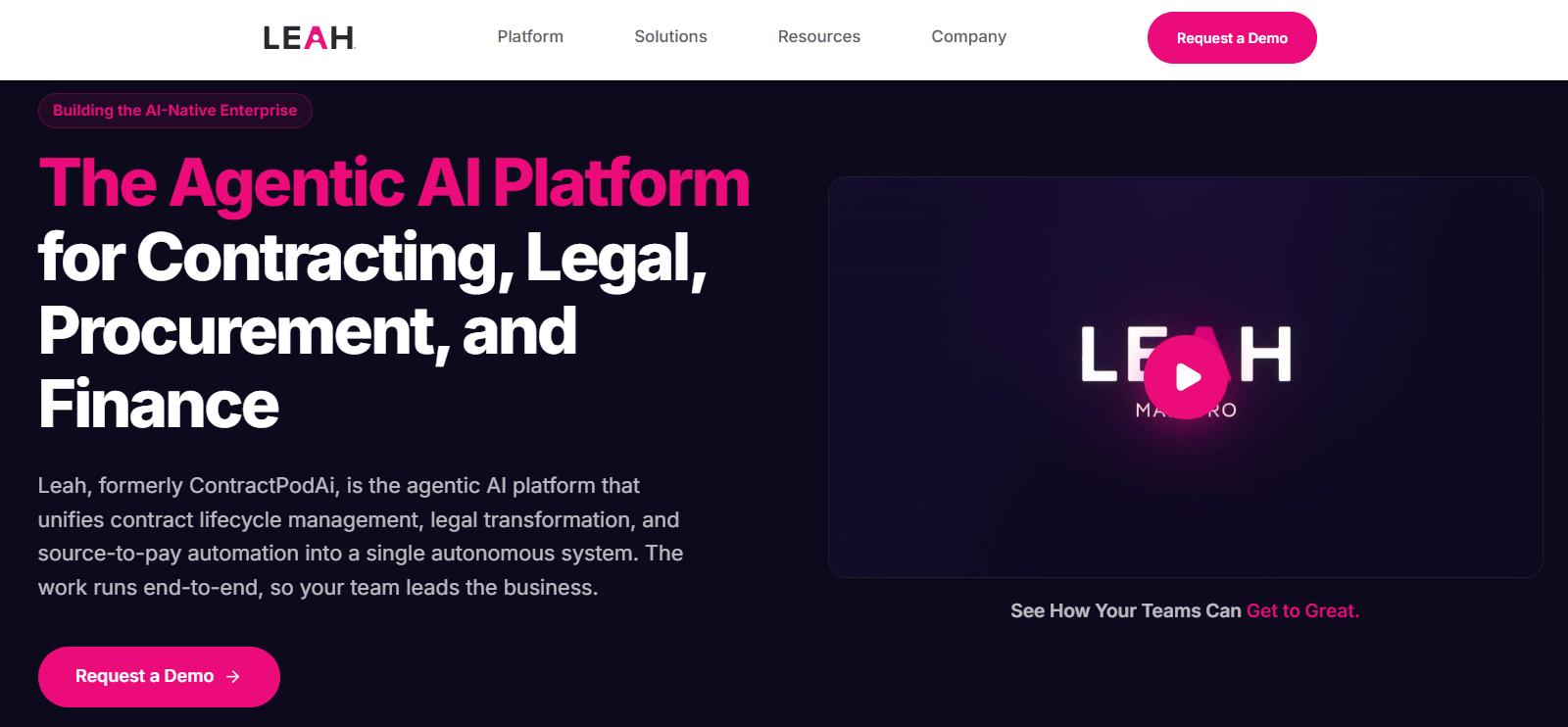
Leah AI targets legal teams drowning in counterparty redlines by automating clause-level markup suggestions grounded in the organization's own precedent library. It is particularly strong for in-house counsel at growth-stage companies handling vendor and SaaS agreements at volume. The key limitation is that its negotiation intelligence is most accurate when trained on a deep internal contract corpus, making cold-start adoption slower.
4. Sirion - Best for Post-Signature Negotiation Risk Monitoring
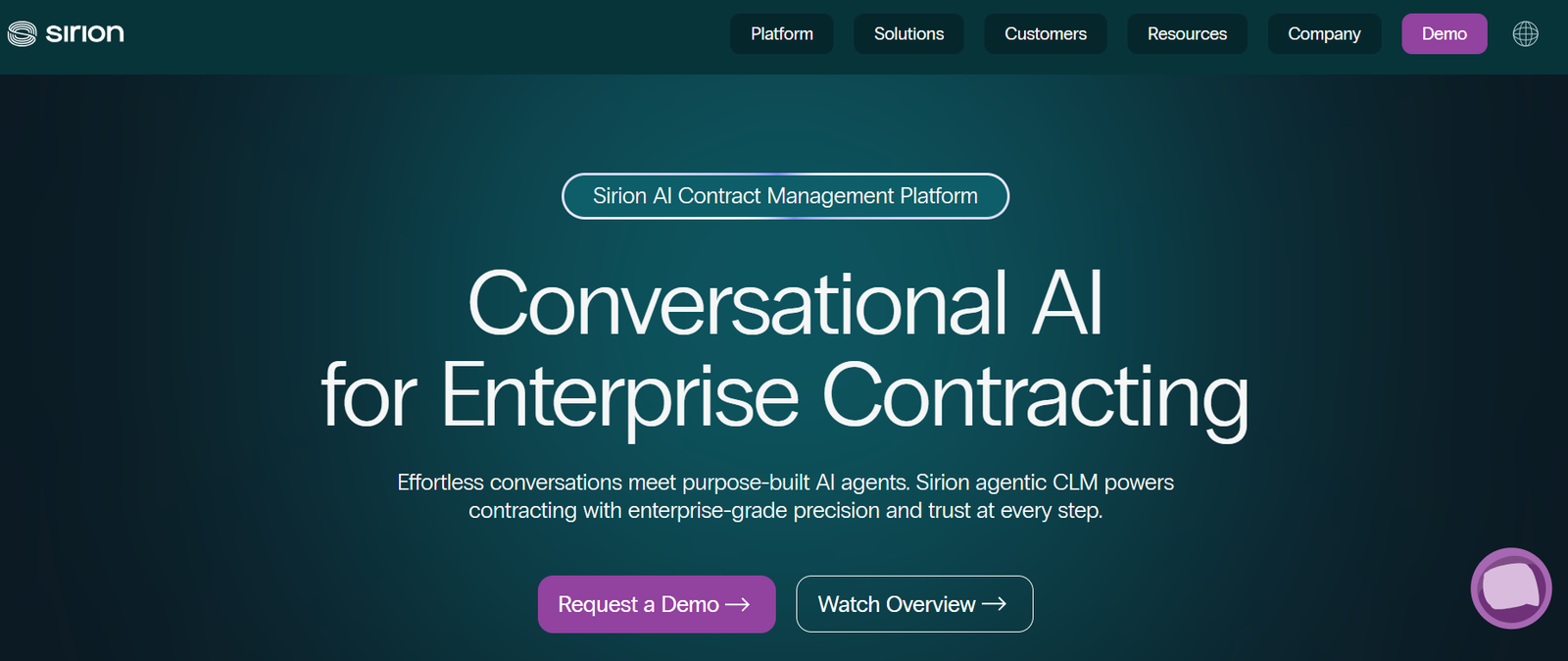
Sirion differentiates by extending AI contract negotiation intelligence beyond execution into ongoing obligation and risk monitoring, catching exposure that surfaces only after signing. It suits enterprise contract managers in regulated industries like financial services and healthcare who need continuous compliance visibility. The tradeoff is that its pre-signature negotiation UI is less intuitive than point solutions built purely for the drafting and redlining phase.
5. DiLiTrust - Best for Automated Multi-Jurisdiction Contract Risk Detection
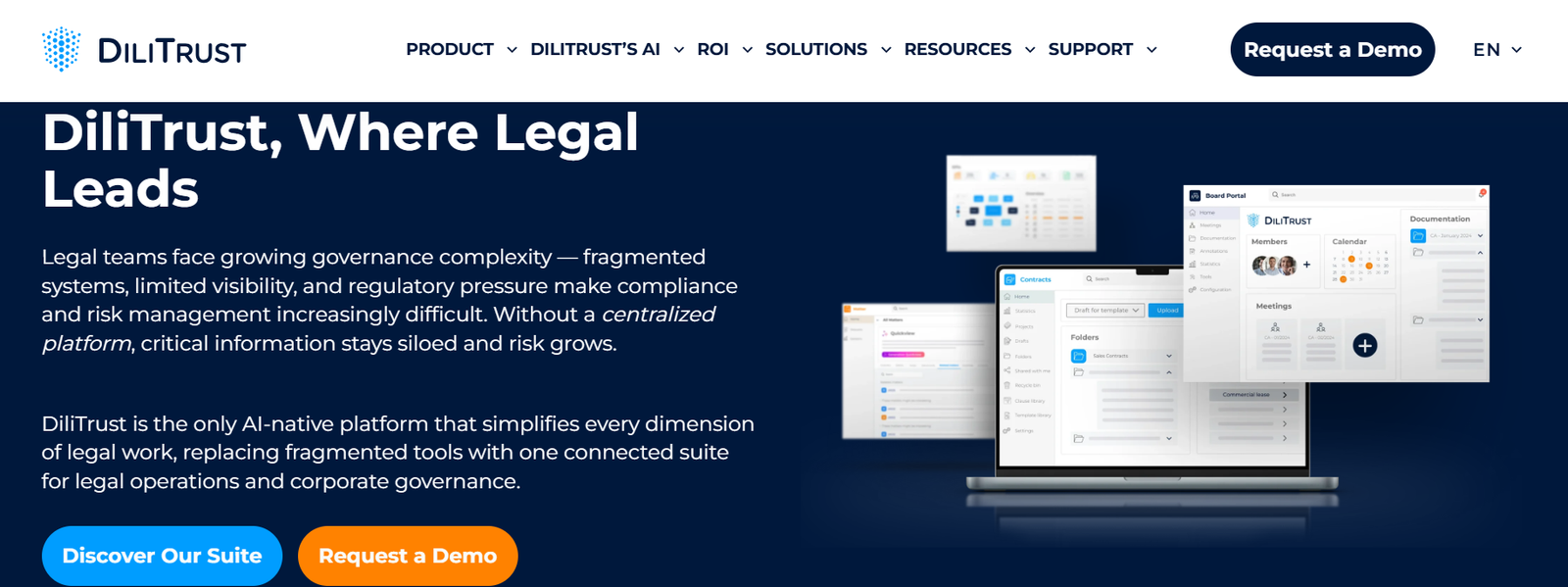
DiLiTrust is purpose-built for legal teams operating across multiple regulatory environments, using AI to detect jurisdiction-specific risk clauses and flag non-compliant language during negotiation. It is the strongest pick for multinational corporations and law firms advising cross-border clients. The notable limitation is that its negotiation suggestion engine is more conservative than competitors, sometimes requiring manual attorney override on commercially aggressive positions.
6. Axiom AI-Augmented Review - Best for Legal Teams Blending AI with Expert Attorney Oversight
Axiom's model pairs AI contract negotiation analysis with on-demand attorney review, making it ideal for legal departments that want AI speed without sacrificing expert judgment on high-stakes or novel contract terms. It suits general counsel offices handling complex commercial agreements where pure automation carries unacceptable risk. The tradeoff is higher per-contract cost compared to fully automated platforms, which limits scalability for routine, low-value agreements.
Leading AI Contract Negotiation Tools in 2026, and How to Evaluate Them
Legal AI models hallucinate on 1 in 6 or more benchmarking queries, a rate of confidently wrong output that is categorically unsafe for contract work without attorney oversight. That figure cuts straight to the core of any serious platform evaluation: a tool that misses a post-signature payment trigger creates financial exposure, but a tool that fabricates the legal authority behind a redline creates a different category of risk entirely. The question is which platform's legal training data you can actually trace back to verified authority.
1 in 6 legal AI queries return hallucinated answers
The failure mode is specific. A general-purpose language model produces contract language that sounds authoritative, uses the right terminology, and arrives in seconds. It may also cite a clause interpretation that no jurisdiction recognizes, or flag a risk based on a statute that was amended two years ago. The reliability of an AI tool for legal tasks depends on the legal dataset behind the model, not merely its interface or speed. A fast redline from a hallucinating model does not save time. It creates a new category of risk that the attorney then has to manually unwind.
AI adoption among legal professionals has massively outpaced firm-level governance. Most in-house counsel using general-purpose AI for contracts are doing so without any institutional vetting of the tool's training data quality, legal accuracy, or hallucination exposure, so individual attorneys are quietly absorbing organizational risk from tool choices made without a legal-domain reliability framework. That is not a minor compliance gap; it is a structural condition, and it is the lens through which every tool below should be evaluated.
One struggle that surfaces repeatedly among attorneys drafting contracts is the gap between generating language quickly and being able to stand behind it. When you are mid-negotiation on an indemnification clause and the AI surfaces a clause interpretation, the real question is: what is the controlling authority, and does it actually hold in this jurisdiction? Without a direct line to primary sources, the attorney is left manually cross-referencing, which erases the time savings the tool was supposed to deliver. Platforms such as Spellbook, Robin AI, DocJuris, and Juro each approach this traceability problem differently, and those differences matter more than interface or speed when evaluating fit.
The tools below are evaluated on that standard first, then on workflow fit and deployment footprint.
1. OpenCase.com - Best AI Contract Negotiation Tool for Lawyers Who Need Verified Legal Answers
OpenCase.com grounds every drafting suggestion and contract research answer in cited, verifiable legal sources rather than general language model output. Where legal AI models hallucinate at rates Stanford HAI measured as one in six or more queries, OpenCase.com verifies answers against primary sources, including Cornell LII, daily PACER/RECAP dockets, and govinfo, so the authority behind every answer is surfaced and traceable, not inferred from training data alone.
For a startup GC who needs to know whether a clause interpretation holds in a specific jurisdiction, the platform surfaces the controlling authority directly, so the attorney verifies the reasoning rather than trusting the model's fluency. That matters most precisely where the drafting stakes are highest: indemnification scope, liability caps, governing law provisions, the clauses where a fabricated precedent does the most damage. The document drafting and file analysis capabilities are designed to work inside the tools legal teams already use, Microsoft Word and Outlook, so there is no parallel workflow to maintain and no copy-paste step that breaks the audit trail.
Most beneficial when your team lacks the bandwidth to manually check AI-generated language against primary sources, and when the cost of a missed or fabricated citation is measured in deal exposure rather than inconvenience. The current limitation is that coverage is United States law only.
Note: OpenCase.com is the publisher of this post. Independent third-party benchmarking data for this platform is not yet publicly available; the description above reflects the platform's documented design approach.
2. LegalOn - Best for Structured Contract Review with Negotiation Playbooks
LegalOn is built around attorney-authored playbooks and specialized AI agents that compare incoming contracts against pre-defined negotiation positions and flag deviations automatically. The honest tradeoff: initial playbook configuration requires meaningful upfront investment, often several weeks of setup before the tool performs at full value. Right-sized for legal teams with consistent contract volume and defined fallback language; less efficient for teams still formalizing their negotiation positions.
3. IntelAgree - Best for AI-Powered Risk Scoring During Contract Negotiation
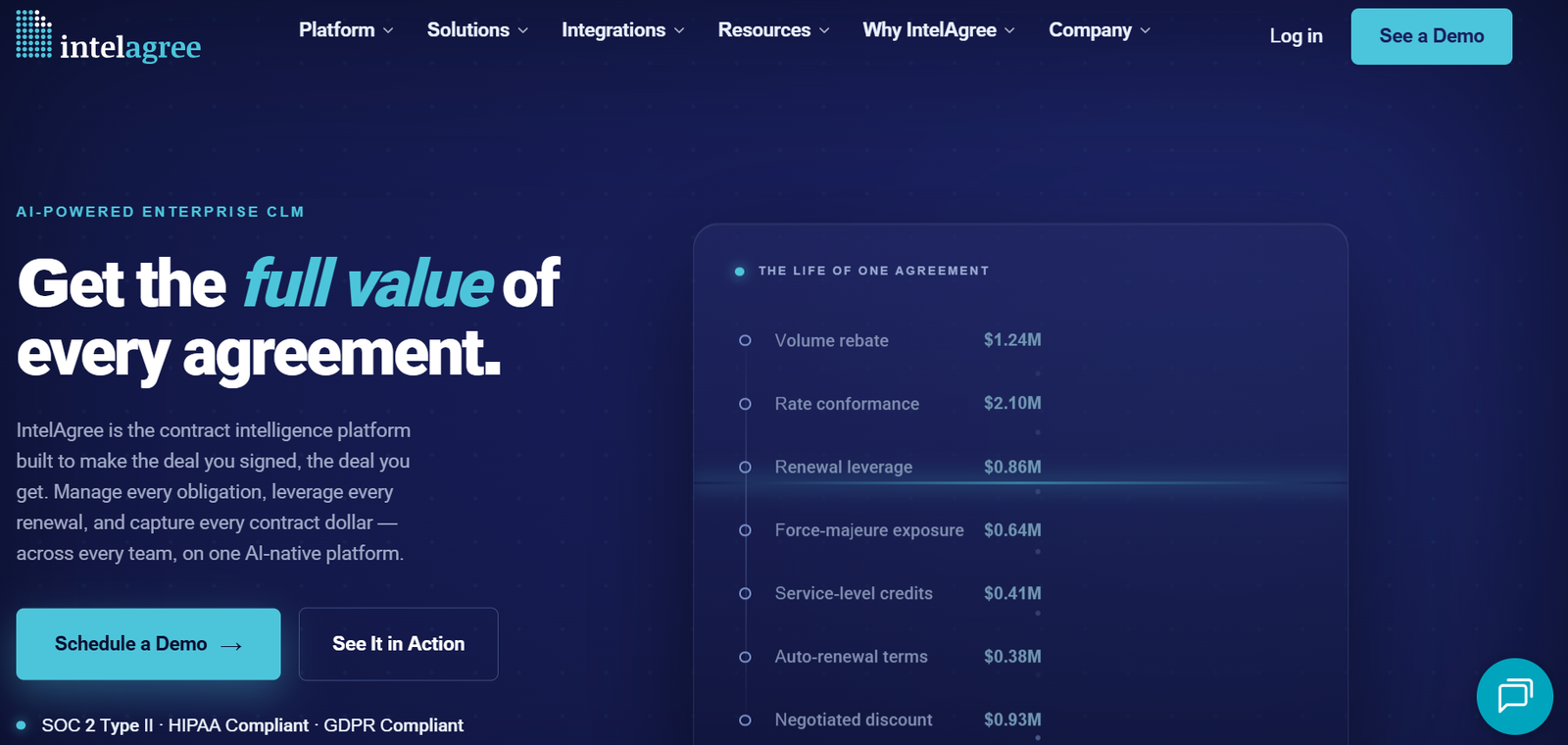
IntelAgree focuses on real-time risk scoring across high-stakes clauses, surfacing indemnification exposure, liability cap deviations, and auto-renewal terms before attorney review. The scoring layer is useful for lean teams that need triage logic built into the review.
4. DocJuris - Best for In-House Teams Implementing AI Negotiation Playbooks at Scale
DocJuris is built around AI-powered playbook execution, enabling in-house legal teams to encode their negotiation positions and apply them automatically during contract review. It's the right fit for legal ops leaders standardizing negotiation workflows across business units. The platform shines on high-volume, repeatable contract types. The tradeoff is that highly bespoke or complex deal structures may still require significant attorney intervention beyond what the playbook covers.
5. Leah AI - Best for Enterprise Contract Redlining and Negotiation Governance
Leah AI, built on ContractPod Technologies, targets enterprise legal and procurement teams that need AI-assisted redlining combined with governance, auditability, and permissions management. It's the right pick when contract negotiation spans multiple stakeholders and requires a defensible audit trail. Its strength is enterprise-grade control over the negotiation workflow. The tradeoff is that its depth of governance features can feel heavyweight for smaller legal teams with simpler negotiation needs.
Related Reading
- Legal Process Automation
- How AI Drafts Legal Documents From Templates
- Automated Contract Drafting
- Agentic AI For Legal Teams
- AI Deposition Summary
- Legal Contract Automation
- AI In Litigation
- Workflow Automation For Law Firms
- Paralegal Automation
How AI Contract Negotiation Tools Integrate with Existing Workflows
Microsoft Word remains the default drafting environment across most legal departments, outside counsel, and counterparties, which means any contract AI that forces attorneys out of that environment creates friction rather than removing it. Tools built natively inside Word preserve the markup conventions, comment threading, and track-changes workflows that legal teams already rely on, rather than asking them to learn a parallel interface and then export back into a format opposing counsel will actually accept.
Most attorneys don't think of Microsoft Word as a product decision. It's just where the work happens. That familiarity is exactly why the best AI contract negotiation tools are built to live inside it rather than alongside it. OpenCase is built around that reality: its Microsoft Word Integration surfaces AI-powered suggestions directly inside the document an attorney is already editing, with no context-switching required.

Many top AI contract negotiation platforms integrate natively with Microsoft Word, surfacing playbook deviations as tracked changes directly inside the document an attorney is already editing. Across the market, leading tools embed directly into Word so attorneys receive AI-powered suggestions and redlines without leaving their review environment. This is a structural choice that keeps attorney oversight intact.
The alternative, copying AI output from a separate portal into a live contract, introduces a quiet failure mode. Suggestions reviewed out of context get accepted faster. A clause that looks reasonable in isolation may contradict a definition three pages earlier. Native integration forces clause-level scrutiny by placing the suggestion next to the actual language it affects.
There is a second, less-discussed reason enterprise legal teams stall or abandon AI contract tool procurement entirely: fears about where contract data is sent and stored externally. Procurement cycles collapse when IT or GC sign-off founders on data residency questions. Integration-first architecture matters here too. Keeping review work inside familiar environments like Word, Outlook, Google Docs, Google Drive, and Dropbox means the document doesn't have to travel to a third-party portal to receive AI assistance, which reduces the surface area of that data-handling conversation. OpenCase's Microsoft Word and Outlook integrations are built with this constraint in mind.
Broader industry trends also identify Google Docs as the secondary integration surface for legal teams that haven't standardized on Microsoft Office. The same risk-reduction logic applies: AI suggestions evaluated inside the live document get more scrutiny than suggestions pasted in from elsewhere.
Workflow design directly determines whether attorney oversight functions as intended or gets quietly bypassed. High-volume, standardized agreements, NDAs, MSAs, and SaaS subscription terms, benefit most from integrated AI contract review. These contracts follow predictable structures, which means playbook-driven AI can flag deviations reliably.
Bespoke agreements with novel commercial terms or jurisdiction-specific complexity are a different matter; there, the integration advantage shrinks relative to the judgment demands the contract places on the attorney. For those matters, OpenCase's document drafting and file analysis capabilities, grounded in Cornell LII data, daily PACER/RECAP dockets, and government publications, give attorneys the research depth to draft with confidence rather than guesswork.
Integration solves the adoption problem. It doesn't solve the underlying legal judgment, and the best tools are honest about that distinction.
Benefits of AI Contract Negotiation, and the Risks That Come with Getting It Wrong
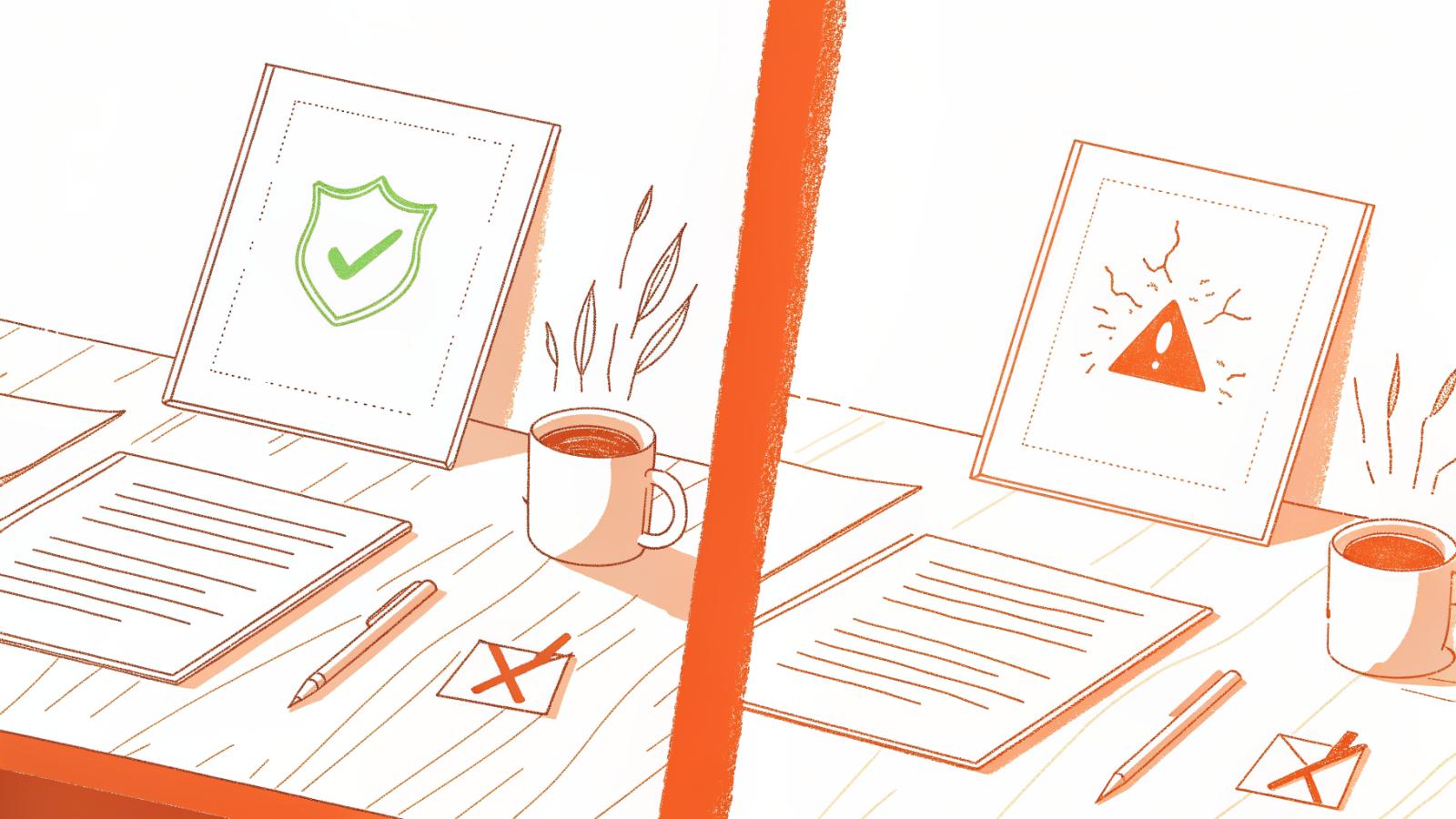
The speed gains from AI contract review are real. According to Sirion's July 2025 analysis, AI can compress review cycles from days to hours on standard agreements, giving lean in-house teams the capacity to handle higher contract volumes without adding headcount. But speed is only a safe benefit when the tool producing it is grounded in verified legal data.
Speed Gains Are Real, But Only If the Output Holds Up
The promise is genuine: faster redlines, fewer bottlenecks, more deals closed on time. The hidden cost arrives when that speed comes from a general-purpose model generating plausible-sounding clause language that no one has time to verify line by line. The hours saved in the review cycle are quietly offset by undetected errors that surface later, at dispute time, where they are hardest and most expensive to fix.
Playbook Consistency, and Where It Breaks
Sirion's research confirms that playbook-driven AI applies the same negotiation standards to every contract, eliminating the deviation risk that builds up when attorneys are fatigued or context-switching across a stack of agreements. The failure mode is narrower but serious: if the AI misreads the legal basis underlying a playbook position, or applies a standard clause to a jurisdiction where it does not hold, the consistency becomes a liability multiplier. Every contract gets the same wrong answer.
AI Hallucination in Contract Language Is a Documented Risk
This is not a theoretical edge case. According to Dan Cumberland Labs (August 2026), general-purpose AI tools lack consistency guarantees, and the same clause can receive materially different interpretations across sessions. That variability in a contract context is a liability that moves closer to signature with every accelerated review cycle.
How Tool Selection Determines Which Side You Land On
The same capability that makes AI contract review valuable, speed and consistency at scale, is also what makes tool selection a legal decision rather than a software preference. A purpose-built legal AI platform built on verified legal data rather than general language model output is designed to anchor drafting output in current statutes and jurisdiction-specific rules, reducing the risk that speed gains mask undetected errors. (When evaluating any platform on this standard, ask the vendor to demonstrate a live citation trace from a generated clause back to a primary legal source.)
Best Practices for Implementing AI in Contract Negotiation Without Introducing New Risk
Governance is the part most legal teams skip. They run the pilot, get attorney sign-off on the interface, and ship the tool, only to discover three months later that an AI-generated redline carrying a fabricated indemnification standard has already reached a counterparty. The adoption was smooth. The governance was absent. That sequence is the actual failure mode.
AI tools across the field hallucinate legal citations, fabricating case names, citations, and quotes that do not exist, which creates serious risk when output goes unverified in legal or contract documents.
1. Mandate Attorney-in-the-Loop Review Before Any AI-Generated Redline Goes to the Other Side
Stanford HAI's 2024 benchmarking research found that AI legal models hallucinate on 1 in 6 or more queries. That error rate is concentrated in exactly the clause types that carry the highest contract risk: indemnification, liability caps, jurisdiction-specific enforceability standards, and auto-renewal provisions. That means the 1-in-6 figure surfaces most reliably where a missed error is most costly and where a signed commitment is most likely to follow.
A missed error in those clauses is a signed commitment.
The fix is a hard gate, not a soft guideline. No AI-generated markup leaves the building without attorney review. Build that step into the workflow at the tool level, not as a policy memo that gets ignored under deadline pressure.
2. Build and Enforce a Playbook-Driven Clause Library Before Deploying AI Negotiation Tools
AI is only as disciplined as the constraints you give it. Without a clause library that encodes your fallback positions, approval thresholds, and non-negotiable terms, the tool has no standard to compare incoming contracts against. It produces output, not your positions.
Teams that skip this end up with AI-assisted negotiation that is faster but no more consistent than what an overloaded attorney produces at 9 p.m.
3. Conduct a Data Flow Audit Before Connecting AI Tools to Contract Repositories
Contract content routinely contains pricing terms, supplier relationships, counterparty identities, and liability exposure that collectively map a company's competitive position. Pre-deployment data flow audits remain rare in practice. Most legal teams skip them entirely, discovering sub-processor exposure only after a vendor's terms-of-service update surfaces the gap. Data breach costs, once reputational and remediation expenses are included, can be substantial, making pre-deployment data flow audits a critical risk-reduction step.
4. Draft Explicit AI Hallucination Mitigation Obligations Into Vendor Contracts Before Go-Live
AI Contract Negotiation Implementation Checklist
Use this checklist before going live with any AI contract negotiation tool:
- 1 — Define playbook: document fallback positions, approval thresholds, and non-negotiable clauses — General Counsel
- 2 — Conduct data flow audit: map every contract repository the AI tool will access and confirm sub-processor terms — Legal Ops / IT
- 3 — Vet training data: confirm the vendor's model is trained on verified legal data, not general internet text — General Counsel
- 4 — Configure attorney-in-the-loop gate: enforce mandatory attorney review before any AI redline reaches counterparty — General Counsel
- 5 — Draft AI hallucination obligations into vendor contract: specify accuracy standards, indemnification for model errors, and audit rights — General Counsel
- 6 — Run a hallucination spot-check: test the tool against 5–10 known clauses before full deployment — General Counsel
- 7 — Schedule playbook review cadence: set a recurring date to update fallback language against current law — General Counsel
5. Establish a Tiered Risk Classification System to Determine Which Contracts AI Can Touch Autonomously
Not all contracts carry equal risk, and AI contract negotiation tools should not be applied uniformly across the portfolio. A tiered classification, routine NDAs at one end, complex multi-party agreements at the other, determines where AI operates autonomously, where it assists, and where it is excluded entirely. This framework protects high-stakes deals from AI error while capturing efficiency on low-risk volume. The challenge is maintaining classification discipline as contract types evolve.
6. Treat AI Governance as a Living Process With Scheduled Quarterly Reviews, Not a One-Time Policy Document
Publishing an AI use policy and moving on is the most common governance failure in legal departments adopting AI contract negotiation tools. Effective governance requires scheduled reviews that reassess which tools touch which tasks, what the AI is missing, and who owns disputed outputs. This is especially critical as CLM platforms quietly expand AI features between updates. The tradeoff is organizational bandwidth: governance reviews require dedicated ownership that many lean legal teams struggle to assign.
Related Reading
- Best Apps for Attorneys
- Matter Management Systems
- Document Review Software For Law Firms
- Best AI For Legal Brief Writing
- Best AI Tools For Personal Injury Lawyers
- Best AI Tool For Legal Redlining
- AI Software For Identifying Issues In Case Files
- Best Patent AI Software For Lawyers
- Contract Drafting Tools
Next steps
If your legal team is moving contracts faster but losing the ability to stand behind what gets sent to counterparties, the path forward starts with recognizing that speed is only a safe benefit when AI outputs are grounded in verified legal data.
The hallucination risk in general-purpose AI is not randomly distributed across low-stakes boilerplate. It concentrates in indemnification, liability caps, and jurisdiction-specific enforceability standards, meaning the 1-in-6 error rate surfaces most reliably where a missed error carries the highest cost. That structural reality means workflow design determines whether attorney oversight actually functions or gets quietly bypassed.
When AI suggestions appear inside the live review environment rather than a separate portal, attorneys apply clause-level scrutiny. When they paste output in from elsewhere, they accept it faster. Together, those two facts point to one conclusion: the tool you use, and how it fits into your existing environment, is a legal decision, not a software preference.
Start with legal AI built on verified primary sources. From there, you can evaluate how playbook integration, native document-environment support, and primary-source citation fit the specific contract volume and risk profile your team manages.
Frequently Asked Questions
Can AI replace lawyers in contract negotiations?
No. The post is explicit that AI surfaces issues, but the attorney owns the judgment call. The routing step in a purpose-built legal AI workflow is described as especially critical precisely because the human review and decision-making cannot be removed from the loop.
How does playbook-driven redlining actually work?
The AI compares incoming third-party paper against your pre-defined negotiation positions and automatically flags every clause that deviates, so attorneys no longer have to manually hunt through a 40-page MSA for a quietly rewritten indemnification carve-out. The post notes one important limitation: the AI is only as good as the playbook it executes against, so a stale or incomplete playbook produces fast output that is still wrong.
What's the real risk of using a general-purpose chatbot for contract review?
Fluency and legal accuracy are not the same thing: a general-purpose model can hallucinate jurisdiction-specific clause standards, misread indemnification carve-outs, or generate redlines that contradict controlling case law while sounding completely authoritative. Stanford HAI measured legal AI hallucination rates at one in six or more benchmarking queries, which the post describes as categorically unsafe for contract work without attorney oversight.
How does AI help with contract risk analysis before an attorney even reads the file?
Purpose-built AI contract tools scan high-stakes clauses, including indemnification, liability caps, and auto-renewal provisions, and surface risk ratings before any attorney review begins. The post gives the example of a 30-day auto-renewal clause buried in Section 14 of a SaaS agreement that a time-pressed GC might otherwise miss on a Friday afternoon, which risk scoring catches first.
Why does the quality of a tool's legal training data matter more than its speed or interface?
A fast redline from a model trained on general internet text carries the visual authority of a proper redline while potentially citing a clause interpretation no jurisdiction recognizes, or flagging risk based on a statute that was amended years ago, and that's a new category of liability the attorney then has to manually unwind. The post argues that the reliability of an AI tool for legal tasks depends critically on the legal dataset behind the model, which is why OpenCase.com grounds every answer in cited primary sources, including Cornell LII, daily PACER/RECAP dockets, and govinfo, so the authority behind every output is traceable rather than inferred from training data alone.