

15 Law Firm SEO Strategies That Drive Qualified Clients
Law firm SEO done right wins more clients. OpenCase reveals 15 proven strategies to rank higher and attract qualified leads today.

A law firm buried on page two of Google is effectively invisible to the clients it most wants to reach. Strong SEO is no longer optional for firms serious about Law Practice Management — it drives consistent, qualified traffic without relying on paid ads or unpredictable referrals. From local search and keyword strategy to content marketing and link building, the right approach turns a firm's website into a steady source of new clients.
Firms that invest in authoritative, search-friendly content earn Google's trust and, more importantly, the attention of people actively looking for legal help. Getting there requires the right tools and a clear strategy, which is exactly where legal AI gives firms a practical edge.
Table of Contents
- What Is Law Firm SEO, and How Does It Differ From Traditional SEO?
- Why Is Law Firm SEO Important for Client Acquisition?
- Which Google Ranking Factors Matter Most for Law Firms?
- 15 Law Firm SEO Strategies That Drive Qualified Clients
- How OpenCase Helps Law Firms Create Accurate, Authoritative Content
- Try our Legal AI to Support your Legal Work from Research to Final Draft
Summary
- Legal consumers move fast when a problem becomes urgent. Research from the Thomson Reuters U.S. Consumer Legal Needs Survey found that 56% of people with a legal need acted within a week, and 16% acted within a single day. This compressed timeline means organic search presence functions as an immediate intake driver, not a long-term brand exercise.
- Page placement in search results is effectively binary for law firms. According to Forward Lawyer Marketing, 75% of users never scroll past the first page of search results, which means a second-page ranking produces nearly the same result as having no web presence at all. Firms losing intake volume often assume they are losing to better competitors, when they are frequently losing to more findable ones.
- Google's ranking algorithm contains over 260 signals, but for law firms competing in local search, a small cluster does the heavy lifting. Eight of the top ten Local Pack ranking factors come from the Google Business Profile rather than from anything on the firm's website, and the primary category selection alone carries more ranking weight than any practice area page a firm has published. Most firms treat the Business Profile as a listing to claim and forget rather than a living asset to maintain.
- Review text functions as a ranking signal, not just a reputation indicator. A client who writes specifically about the type of case they brought and the city where it was handled sends a relevance signal that no keyword-optimized page can replicate. Among firms already competing for the same top local spots, review count and the language inside those reviews become decisive differentiators.
- AI Overviews now appear on roughly 75% of all legal search queries, the highest rate of any industry, according to Trial Guides. This means appearing in the Local Pack or organic results is no longer the only game in town, as Google increasingly synthesizes answers before a user even reaches a firm's website. Firms with verified, well-structured content grounded in traceable primary sources are the ones Google pulls from when constructing those overviews.
- Law firm SEO carries an average ROI of 526% according to First Page Sage, making it one of the highest-return line items in a firm's marketing budget, but only for firms that sustain the effort long enough for compounding to take hold. Unlike paid advertising, which stops delivering when the budget runs out, an optimized practice page continues to generate inquiries for years. The firms dominating local legal search are committed to consistently executing the fundamentals month after month until their authority becomes the default answer Google serves.
- Legal AI addresses this directly by grounding research and content drafts in verified primary sources, including real case law, statutes, and regulations from trusted institutions, so that every published page carries the citational backbone that both Google's YMYL standards and AI Overview systems require.
What Is Law Firm SEO, and How Does It Differ From Traditional SEO?
Law firm SEO targets a critical moment: when someone in distress searches for a legal problem and needs trustworthy answers. According to the Esquire Interactive SEO Guide, 96% of people seeking legal advice use a search engine, making your firm's search visibility a business-critical infrastructure. Law firm SEO is fundamentally different from traditional SEO across strategy, content, and success metrics.
"96% of people seeking legal advice use a search engine — making search visibility not a marketing luxury, but business-critical infrastructure for every law firm." — Esquire Interactive SEO Guide
💡 Key Insight: Law firm SEO isn't just about ranking higher — it's about showing up at the exact moment a potential client is in distress and actively searching for legal help.
⚠️ Warning: Treating law firm SEO like generic SEO is a costly mistake. The strategy, content standards, and success metrics are fundamentally different — and getting it wrong means losing high-intent clients to competitors.
- Primary Goal: Shifts from general traffic and brand awareness to high-intent client acquisition.
- Content Focus: Moves from broad topical authority to deep, jurisdiction-specific expertise.
- Trust Signals: Relies on bar credentials, client reviews, and strict E-E-A-T compliance rather than just backlinks.
- Success Metric: Prioritizes signed cases and qualified leads over simple page views and vanity rankings.

Why does Law Firm SEO operate under different rules?
Legal content falls under Google's YMYL category, which applies Google's highest-quality standards to topics affecting safety, finances, or legal standing. A practice page without named attorney authors, verifiable credentials, and citations to authoritative sources cannot compete in rankings, regardless of keyword placement. A lifestyle blog can publish anonymous content; a law firm cannot.
How does a credibility gap hurt law firm rankings?
Many attorneys write content themselves or give the job to general marketers, creating a trust problem that's difficult to fix at scale. The content may be correct but lacks the structural signals Google requires: cited sources, professional attribution, and verified legal authority. Legal AI platforms like OpenCase, built for trained professionals, generate research and draft content grounded in verified primary law records from sources such as Cornell LII and CourtListener, providing the citation backbone that YMYL standards demand.
The local dimension that changes everything
For law firms, SEO geography is not a filter—it is the whole game. A person searching for an "employment attorney" needs someone licensed in their state, practicing in their city, and reachable without extensive travel. The Google Map Pack, the three local listings above regular results, attracts clicks from people ready to hire a lawyer. Consistent local citations, a complete Google Business Profile, and location-specific pages determine whether a firm appears or disappears in search results.
Intent and measurement demand a different scorecard
The search intent behind legal queries carries a weight that most industries never encounter. Someone typing "DUI lawyer near me" at 11 p.m. is not researching a topic—they are frightened and making a fast decision under pressure. According to the Esquire Interactive SEO Guide, 74% of consumers visit a law firm's website to take action, confirming that your site is not a brochure but a decision point. Measuring SEO by traffic volume in that context is like measuring a trial by attendance. The only number that matters is how many are left as clients.
Why does Law Firm SEO require a conversion-first measurement approach?
But knowing that conversion is the real metric raises a harder question that most firms are not yet asking themselves.
Why Is Law Firm SEO Important for Client Acquisition?
How law firms get new clients has shifted from knowing people to being easy to find online. According to Forward Lawyer Marketing, 96% of people seeking legal help use a search engine. When someone faces a legal problem requiring immediate assistance, they search first rather than call a friend. If your firm doesn't appear in those search results, you're absent when they need you—and that moment is typically your only opportunity.
"96% of people looking for legal help use a search engine—making search visibility the single most critical factor in modern client acquisition." — Forward Lawyer Marketing
🎯 Key Point: Search engines are now the first stop for anyone facing a legal issue, not referrals, phone books, or word of mouth.
🔑 Takeaway: If your firm isn't ranking in search results, you're invisible during the most critical moment of a potential client's decision—and you rarely get a second chance.

The Window Is Shorter Than You Think
People who need legal help don't shop the way furniture shoppers do. The Thomson Reuters U.S. Consumer Legal Needs Survey found that 56% of people with a legal need took action within a week, and 16% within a single day. This short timeline means your organic search presence captures clients immediately, rather than building your brand over time. A firm with strong local SEO, optimized practice-area pages, and consistent Google Business Profile signals captures fast-moving prospects. Without them, your intake calendar stays quiet.
Why does being on page two mean clients never find you?
The math is clear and strict. Forward Lawyer Marketing reports that 75% of users never scroll past the first page of search results; second-page rankings are invisible. Most lawyers assume they're losing to better competitors. Often, they're losing to those that are easier to find: firms that invested in technical SEO, secured quality backlinks, and built content that answers the exact questions their target clients search for at 11 p.m., when worried and seeking help.
How does Law Firm SEO fill the gap that referrals leave?
Referrals and directory listings are no longer enough. Referred clients now check you out online before calling, and a weak or outdated web presence can undermine the trust a referral built. Platforms like OpenCase help attorneys create legally rigorous, citation-backed content that builds the topical authority Google rewards and the trust skeptical prospects need when they land on your site.
Why does organic search convert better than paid ads for law firms?
Traffic without conversion is noise. Organic search visitors arrive with intent already formed. According to Shamil Shamilov on LinkedIn, 66% of call conversions in the legal industry come from organic search rather than paid ads, social media, or directories. SEO isn't a marketing expense competing with billboards; it's the channel most directly connected to your phone ringing with a qualified prospect who already wants what you offer.
How does Law Firm SEO create a structural competitive advantage over time?
Every month, a competitor publishes authoritative content, earns a backlink, and climbs one position closer to the top three; they build a structural advantage in domain authority and search ranking that takes sustained effort to close. Firms treating SEO as optional today will face a steeper climb in eighteen months, competing against entrenched rankings.
But knowing which ranking factors move the needle for law firms is where most firms get lost, and the answer is more precise than most people expect.
Related Reading
- Law Practice Management
- Google Gemini For Lawyers
- Claude vs. ChatGPT for Lawyers
- ChatGPT Prompts For Lawyers
- Copilot For Lawyers
- Ai Use Cases For Lawyers
- Ai Legal Hallucinations
- Legal Tech Trends
- Prompt Engineering For Lawyers
- Legal Writing Ai
- Claude For Lawyers
- Ai Legal Ethics
Which Google Ranking Factors Matter Most for Law Firms?
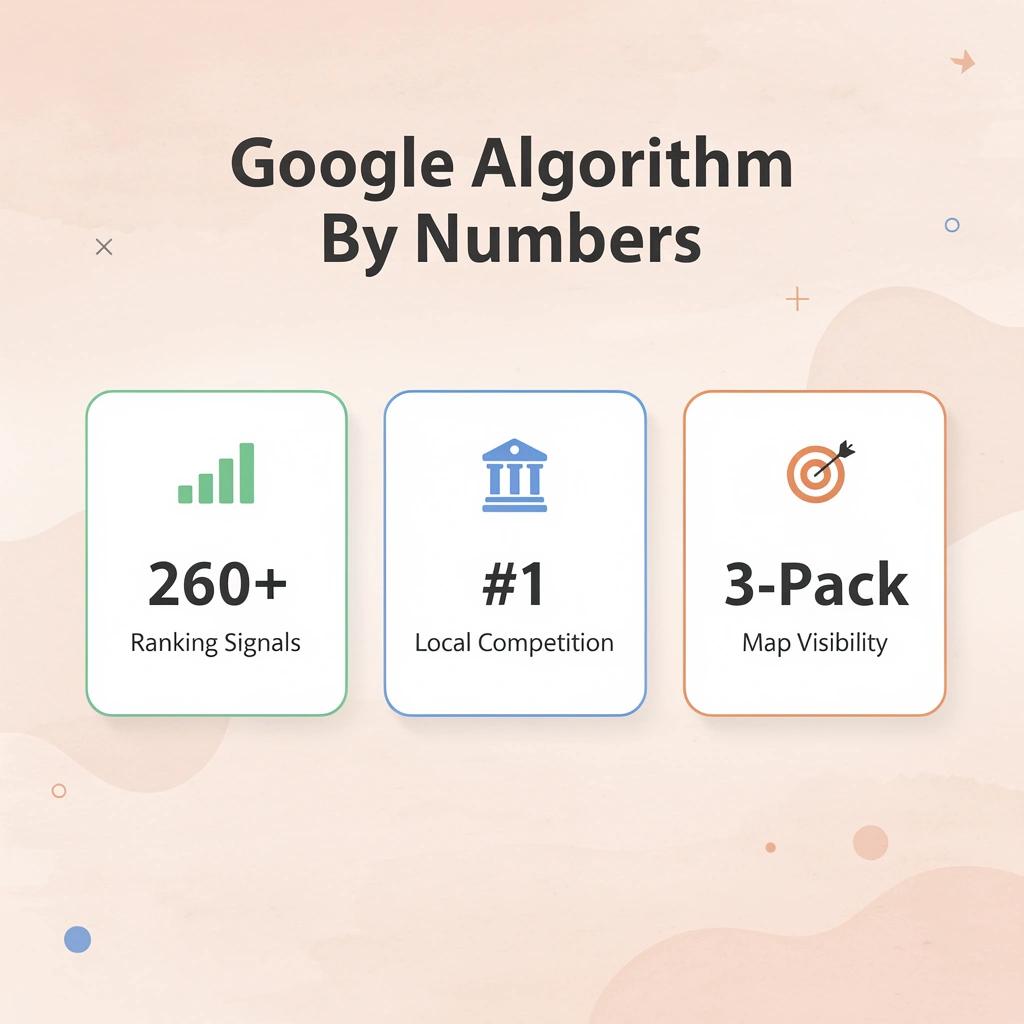
Google's ranking algorithm contains over 260 individual signals, according to Trial Guides' Complete Guide to Google Ranking Factors for Law Firms, but for law firms competing in local search, only a small group of those signals does most of the work. Winning firms find the right levers and pull them hard.
"Google's ranking algorithm contains over 260 individual signals — but for law firms, a small cluster of those signals drives the majority of local search results." — Trial Guides, Complete Guide to Google Ranking Factors for Law Firms
🎯 Key Point: With 260+ ranking signals in play, law firms cannot optimize everything. The smartest strategy is identifying the high-impact factors that move the needle in local search and focusing resources there.
🔑 Takeaway: Firms that win in local search aren't optimizing across 260 signals — they're pulling the few critical levers that deliver outsized results.
The factor most firms ignore completely
Proximity is the single biggest ranking factor in local search, and no content strategy can overcome it. A firm's physical location relative to the searcher, combined with how its service areas are configured in the Google Business Profile, determines whether it can compete for a given search. Attorneys in crowded markets often spend their entire budgets on blog content while a competitor two blocks from the courthouse ranks higher on every high-intent query. Content volume cannot compensate for a misconfigured service area or a physical address outside the searcher's radius.
Why your Business Profile outweighs your website
Eight of the top ten Local Pack ranking factors come from the Google Business Profile, not from your website. The primary category selection carries more ranking weight than any practice area page you've published. Most firms treat the Business Profile as a listing to claim and forget, while firms gaining ground treat it as a living asset: regularly updated photos, accurate service areas, consistent contact information, and category selection that matches the exact legal service the searcher seeks.
How do client reviews function as a Law Firm SEO ranking signal?
Reviews deserve their own moment because most attorneys file them under reputation rather than ranking. Review count and specific language in review text are decisive differentiators when nearby, relevant firms compete for the same top spots. A client who writes "helped me fight a wrongful termination case in downtown Houston" sends a relevance signal that no keyword-optimized page can replicate. Asking for reviews is a ranking strategy.
Why does verified, authoritative content matter for your Business Profile claims?
When law firms create content to support their Business Profile claims, that content must be traceable, authoritative, and accurate. Platforms like legal AI help attorneys produce research-backed content verified against real case law and statutes from trusted sources. Google evaluates whether a firm's website substantiates the expertise its Business Profile asserts. Unverified content undermines credibility with both clients and search algorithms.
How are AI Overviews changing the Law Firm SEO landscape?
Trial Guides reports that AI Overviews appear on roughly 75% of all legal search queries, the highest rate of any industry. Appearing in the Local Pack or organic results is no longer sufficient; Google increasingly generates answers before users reach a firm's website. Firms with established authority through verified content, strong Business Profile signals, and credible reviews are the ones Google draws from when building those overviews.
15 Law Firm SEO Strategies That Drive Qualified Clients
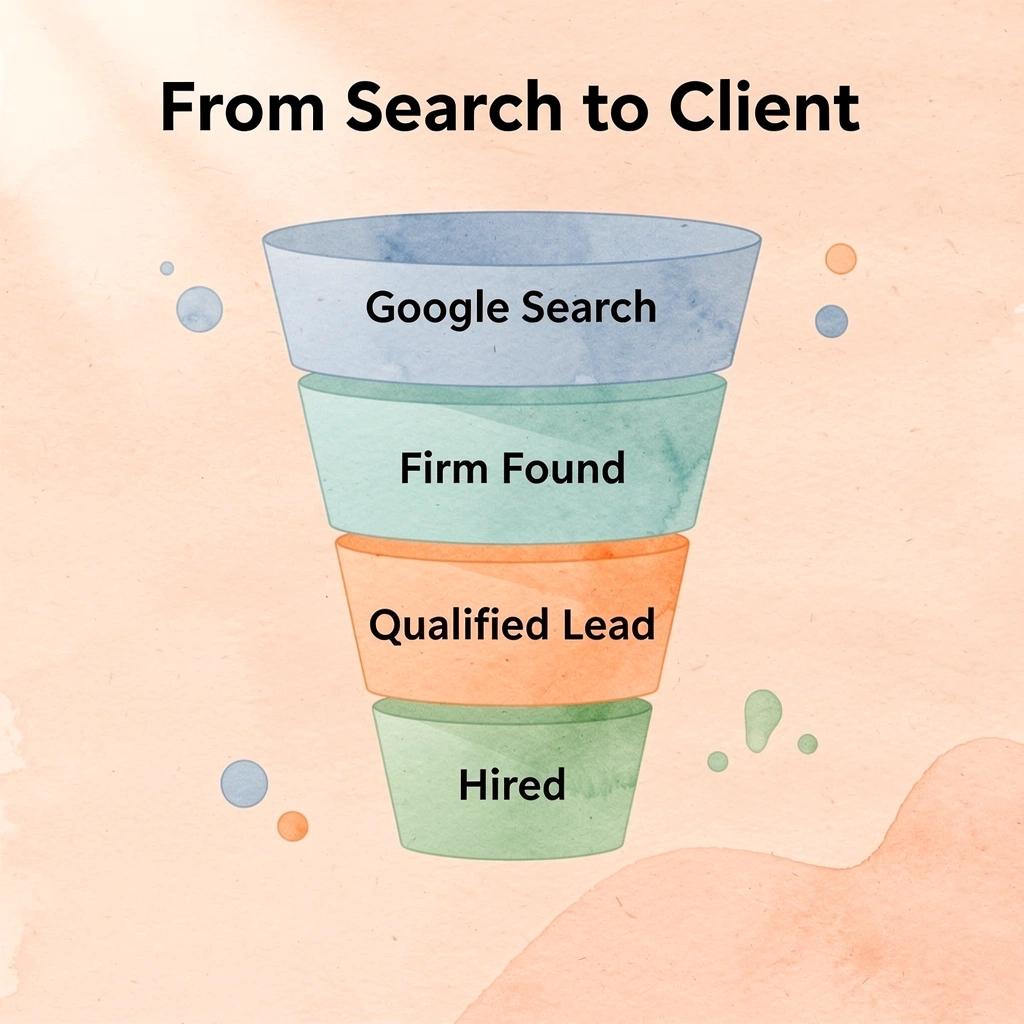
Getting found on Google requires stacking the right moves so that when someone searches for their legal problem, your firm is the credible, nearby answer they click. The fifteen strategies below attract qualified prospects—those with a real case and intent to hire. Each works independently, and together they compound into a durable stream of client inquiries.
"The firms that dominate search results don't rely on a single tactic — they stack strategies that reinforce each other, building a compounding pipeline of qualified client inquiries that grows over time." — Law Firm SEO Best Practices
🎯 Key Point: These 15 strategies are designed specifically to attract high-intent prospects — not just traffic, but people with a real legal need and the motivation to hire.
💡 Tip: Don't wait until you've perfected one strategy before starting the next. Each tactic compounds on the others, meaning your total SEO impact grows exponentially when they work together.
- Local SEO: Captures high-intent nearby searchers; ideal for all practice areas.
- Content Marketing: Establishes credibility and trust; best for explaining complex legal topics.
- Technical SEO: Enhances site crawlability and load speeds; essential for firm-wide visibility.
- Link Building: Strengthens domain authority; most effective in highly competitive markets.
- Review Management: Directly increases click-through rates; vital for social proof and conversion.
1. Claim and Fully Optimize Your Google Business Profile
Your Google Business Profile is the highest-return asset in local search—it controls whether your firm appears in the local map pack above organic results for "lawyer near me" queries. Claim it through Google's process, then complete every field: accurate name, address, phone number, office hours, service areas, a detailed description, and real photos of your office and team. An unverified or incomplete profile forfeits visibility when prospects are ready to call. This foundation supports all other local SEO efforts.
2. Choose the Most Specific Primary Category You Can
Your primary category carries more weight in rankings than any other local signal. Choosing "Personal Injury Attorney" or "Family Law Attorney" instead of the generic "Lawyer" or "Law Firm" tells Google exactly which searches you're eligible to appear for—specificity wins. A firm listed under "Lawyer" competes for everything and dominates nothing, while exact categorization appears in high-intent queries that convert to consultations. Add relevant secondary categories to capture your full scope of services.
3. Build a Dedicated Page for Every Practice Area and Location
A catch-all "Services" page cannot rank for the distinct problems clients search for. Build a separate page for each practice area, and for multiple cities, a dedicated page for each practice-area-plus-location combination, such as "Car Accident Lawyer in Miami" or "Divorce Attorney in Phoenix." Each page needs genuinely unique content: local court information, state-specific filing deadlines, relevant case results, and attorney bios with local ties. Thin pages that merely swap the city name are a well-known ranking trap that Google discounts—depth and jurisdictional detail separate ranking pages from those that get ignored.
4. Write Content That Answers the Questions Clients Ask Before Hiring
The strongest legal content strategy starts with the exact questions a person asks before hiring a lawyer: "How much does a DUI defense cost?" "What's the deadline to file an injury claim in my state?" "What happens at a first divorce consultation?" Content built around these high-intent questions positions your firm as the guide at the moment of decision, captures long-tail searches that competitors ignore, and provides the question-and-answer structure that AI Overviews and tools like ChatGPT and Perplexity draw on.
5. Demonstrate E-E-A-T With Real Attorney Credentials
Google categorizes legal content as "Your Money or Your Life" and scrutinizes it carefully. It evaluates Experience, Expertise, Authoritativeness, and Trustworthiness by examining who wrote the content, not just the words themselves. Every practice page, article, and FAQ should display the attorney author with verifiable bios, bar admissions, and credentials, ideally written or reviewed by a licensed attorney. Individual attorney profile pages are among the strongest trust assets a firm can publish. Content lacking an author name or featuring generic information signals low authority in a field where authority directly affects rankings. Credentialed authorship is both ethically sound and strategically beneficial for search performance.
6. Keep Your NAP Consistent Across Every Directory
Your firm's name, address, and phone number (NAP) must appear identically across your website, Google Business Profile, legal directories such as Avvo, Justia, FindLaw, Martindale-Hubbell, and your state and local bar listings. Google verifies your firm's legitimacy through these mentions, and even minor inconsistencies—such as "Suite 200" versus "#200"—create conflicting signals that lower your local rankings. Audit your current citations, correct any mismatches, and establish one exact format before adding new listings.
7. Build a Steady Stream of Genuine, Keyword-Rich Reviews
Reviews are a ranking factor whose weight increases sharply among firms competing for top local spots. Create a repeatable workflow that invites satisfied clients to leave detailed reviews that mention the specific service received—"wrongful termination" or "DUI defense"—which strengthens Google's understanding of your practice areas. Respond professionally to every review, positive and negative, to demonstrate ongoing engagement. Never buy or fake reviews; Google's spam updates specifically target inauthentic engagement with severe penalties. Real, recent, specific reviews become the tiebreaker when multiple nearby firms are equally relevant.
8. Earn Local, Relevant Backlinks Instead of Chasing Volume
Building links for law firms should prioritize trust over quantity. A single link from a local news outlet, regional bar association, law school, or sponsored community organization carries more local ranking power than dozens of low-value directory submissions because it demonstrates the geographic relevance Google uses to rank you in your city. Earn links by offering expert commentary to local journalists, publishing original research like state-specific statistics that others will cite, and building relationships with credible local institutions. Since Google's spam policies penalize manipulative link schemes, the best long-term approach is earning mentions that align with your legal brand.
9. Implement Schema Markup So Search Engines Understand Your Firm
Schema markup tells search engines what your content means, improving your firm's visibility in search results. Add LocalBusiness or LegalService schema to your homepage and practice pages, and Attorney schema to profile pages. Ensure details match your Google Business Profile exactly: name, address, phone, and hours. This machine-readable information also helps AI-powered search systems read and cite your content. Note: FAQ markup no longer creates rich results for most law firm sites, so keep FAQ sections as visible page content for usability and AI retrieval rather than expecting search result improvements.
10. Make Your Site Fast, Mobile-First, and Technically Sound
Most legal searches happen on phones during urgent, high-stress moments—a slow or clunky mobile site loses prospects before they contact you. Google uses mobile-first indexing and weighs Core Web Vitals, such as loading speed and interaction responsiveness. Ensure pages load quickly, use HTTPS, display cleanly on every screen size, fix broken links, and include a clear click-to-call button. A logical site structure with clear internal links connecting practice pages, attorney profiles, and location pages helps both users and search engines navigate your firm.
11. Target Keywords by Intent, Not Just Search Volume
Focus on keywords showing people want to hire you, not just popular search terms. Match keywords to client needs: phrases like "criminal defense lawyer Chicago" signal hiring intent, urgent phrases like "need a lawyer after a car accident" generate faster calls, and specific long-tail queries convert better due to lower competition and clearer intent. Assign one keyword group per page, so car accidents, wrongful death, and medical malpractice each have dedicated pages rather than mixing together. Chasing broad terms like "lawyer" wastes time and money since they rarely convert to clients.
12. Optimize for AI Overviews and Generative Search
People seeking legal help now encounter AI-generated answers from Google's AI Overviews, ChatGPT, Perplexity, and Gemini before traditional search results. Law firms with detailed, well-organized content appear in these summaries, while thin content gets excluded. To gain visibility, answer specific legal questions directly, use clear headings, and demonstrate your expertise as an attorney. Google confirms that basic SEO remains important and that helpful pages optimized for search snippets can appear in AI features without special code. Structuring your content so machines can extract clear, trustworthy answers is now essential for discoverability.
13. Create Location Pages With Real Local Substance
For firms serving multiple cities or neighborhoods, dedicated location pages capture geographically specific demand, but only with unique, locally grounded content. A strong location page references the actual courts that hear those cases, city- or county-specific legal nuances, attorneys with ties to that community, and testimonials from local clients. Give each location its own page with its own LocalBusiness schema, linked to the matching Google Business Profile. Duplicating a template and changing only the city name signals thin content to Google and undermines your rankings, so invest in genuine local depth per market.
14. Track Cases and Consultations, Not Just Traffic
Vanity metrics like raw traffic and impressions can mislead law firms—one signed personal injury case outweighs thousands of visitors who never call. Implement proper measurement: call tracking, form-submission tracking, and conversion measurement tied to specific page groups. This reveals which practice pages and location pages drive consultations and retained clients. Since prospects visit your site multiple times before contacting you, tracking must follow the entire path to the signed case. Measure what matters so you reinvest in pages that generate revenue, not just clicks.
15. Treat SEO as a Sustained Investment That Compounds
Law firm SEO builds over six to twelve months and compounds thereafter: the highest-return channel for firms that commit to it. Unlike paid ads, optimized practice pages generate inquiries for years, and top rankings defend themselves against later competitors. Firms that dominate local legal search execute fundamentals consistently, not through quick campaigns. Patience paired with steady work wins the market.
Knowing the right strategies differs from producing content that earns authority, where most firms hit an unexpected wall.
Related Reading
- Legal Billing Software
- Law Clerk
- Lawyer Salary
- Billable Meaning
- Law Firm Marketing
- Legal Ai Tools
- How To Use ChatGPT for Legal Research
- Will Lawyers Be Replaced By Ai
- Is ChatGPT Good For Personal Injury Lawyers
- Iolta Account
- Objections In Court
How OpenCase Helps Law Firms Create Accurate, Authoritative Content
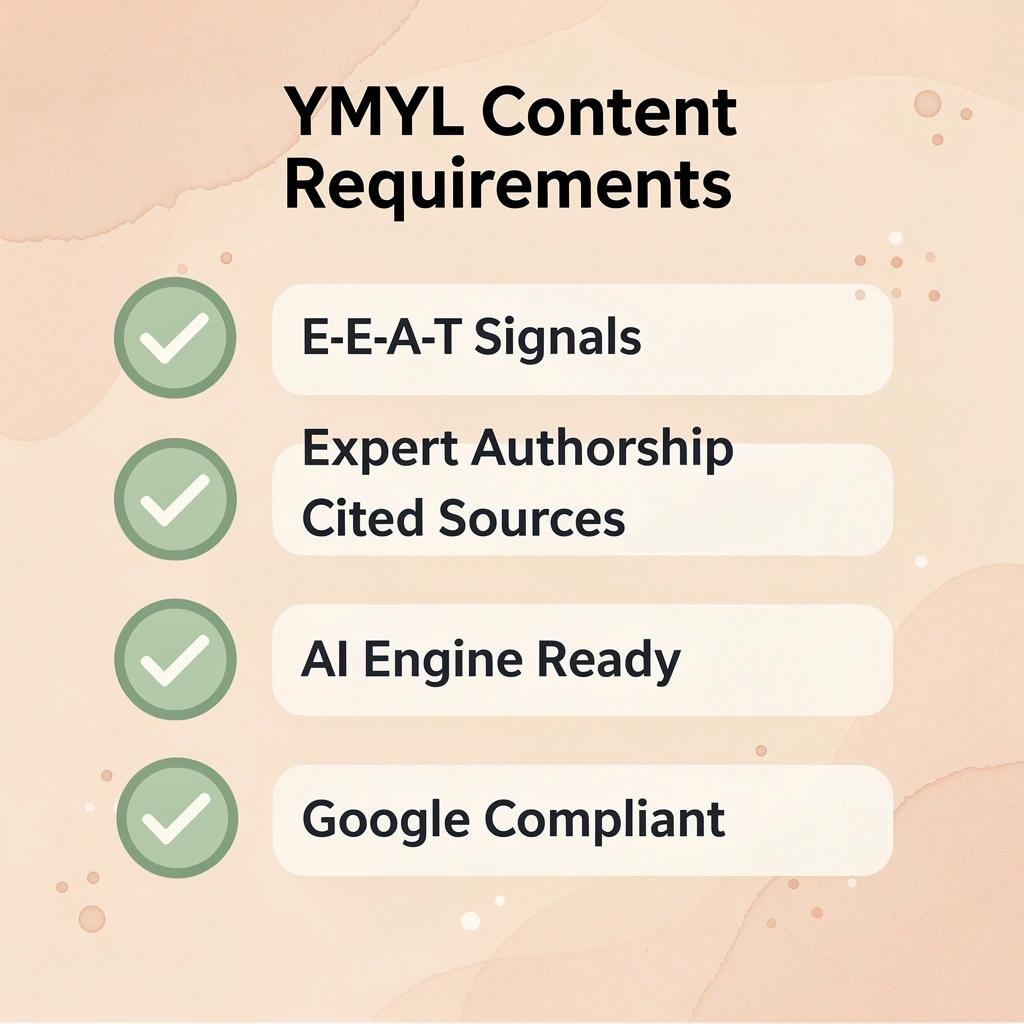
Most companies hit a production problem, not a strategy one. Creating legal content that meets Google's YMYL standard, satisfies E-E-A-T, and earns citations from AI engines requires the same discipline as preparing a brief: every claim needs a source, every source needs verification, and the whole thing must hold up under scrutiny.
"Every claim needs a source, every source needs verification, and the whole thing must hold up under scrutiny." — The OpenCase Content Standard
🎯 Key Point: Legal content isn't just about what you say — it's about proving every claim meets the same evidentiary bar as a courtroom filing.
💡 Tip: Before publishing any legal article, run it through a three-layer check: claim accuracy, source verification, and E-E-A-T alignment — the same way you'd review a brief before submission.
- YMYL Standard: Applies to legal content because it impacts personal rights and financial well-being, requiring the highest level of accuracy and scrutiny.MRS Digital
- E-E-A-T Signals: Experience, Expertise, Authoritativeness, and Trustworthiness are critical metrics Google uses to evaluate content quality and determine search rankings.Mentor Digital
- Source Verification: Essential for proving accuracy and building authority; grounding claims in credible, primary legal sources protects firm reputation and reader trust.iSocialWeb
- AI Engine Citations: AI models prioritize authoritative, structured, and entity-rich content when selecting sources; high-quality citations drive visibility by positioning your content as the "best evidence" for AI answers.
Where accuracy breaks down at the drafting stage
The failure point is usually invisible until it matters. An associate drafts a practice page, pulls a statute of limitations from memory, and publishes a number accurate two legislative sessions ago. No one flags it. The page ranks. A prospective client reads it, acts on it, and the firm's credibility takes a hit it never saw coming. Law firms that publish consistent content get three times more leads than those that do not, but that advantage disappears the moment consistency means consistently wrong. Volume without verification is a liability that compounds quietly over time.
How verified citations change the content equation
The familiar approach involves researching a topic, drafting content, and then adding citations as a formatting step, where accuracy often slips. When citations are decoration rather than the foundation, arguments are written first, and support is retrofitted, often poorly. Legal AI platforms like OpenCase reverse that sequence: verified authority from primary sources (Cornell LII, CourtListener, govinfo) comes first, and content builds on top of it. The result is trustworthiness that's structural, not cosmetic.
Why do AI engines reward this kind of content?
Generative search engines cite content because it is verifiable, not because it sounds authoritative. A practice page that states a jurisdictional rule and links to the authenticated statute gives an AI engine something concrete to extract and attribute. A page asserting the same rule without a traceable source is passed over, regardless of how well-written it is. Since potential clients say thought leadership content influences their decision to hire a law firm, the content that earns AI citations is also the content that converts. Precision and persuasion are the same thing.
The consistency problem nobody talks about
The biggest risk in legal content marketing is the gap between your best page and your worst one. One careful practice area breakdown next to one thin location page means the weaker page becomes how a skeptical reader or Google quality rater judges the whole firm. Building accuracy into the workflow, not individual pieces, closes that gap. When every query returns verified, source-linked authority, the standard no longer depends on who wrote the page or how much time they had.
What most firms discover too late is that the content problem and the credibility problem are one and the same.
Related Reading
- Best Ai Contract Review Tool
- Everlaw
- Spellbook
- Legora
- Ivo
- Clio
- Law Insider
- ChatGPT For Lawyers
- Harvey
Try our Legal AI to Support your Legal Work from Research to Final Draft
OpenCase closes the credibility gap by providing research answers based on real case law, statutes, and regulations from over 100 legal databases. Every citation can be traced back to its source and works directly in Microsoft Word as you write, eliminating manual research work.
"Every citation can be traced back to where it came from across over 100 legal databases — verified, sourced, and ready to use." — OpenCase
💡 Tip: Tools that integrate directly into Microsoft Word eliminate the costly back-and-forth between research platforms and your draft, saving time on every matter you handle.

Winning law firms rank high in legal search because of credibility, not because they publish a lot of content — they publish fewer pages that hold up when checked rather than more pages that make people trust them less. Your content should meet the same standard your clients expect from your legal work.
🔑 Takeaway: In legal marketing, quality beats quantity every time — one verified, well-sourced practice page outperforms a dozen pages that erode client confidence.
⚠️ Warning: Publishing unverified legal content doesn't just hurt your SEO — it undermines the professional credibility your firm has worked to build. Visit OpenCase to make sure your next practice page is based on verified information.
- Fewer, verified pages: Increases credibility because citations hold up under scrutiny; builds long-term client confidence.
- More unverified pages: Decreases credibility as frequent errors erode authority and damage professional reputation.
- OpenCase-backed content: Maximizes credibility by sourcing from 100+ legal databases; establishes high-level expertise.