

10 Key Law Clerk Responsibilities in Modern Legal Practice
Law clerk duties are evolving fast. OpenCase breaks down 10 key responsibilities that shape modern legal practice.

Behind every well-prepared attorney is someone doing the essential groundwork: reviewing case files, analyzing statutes, drafting legal memoranda, and tracking down precedents that could shape the outcome of an argument. Law clerks fill that role, supporting both judges and supervising attorneys with the research and analysis that keep cases moving forward. Their contribution to law practice management is often underestimated, yet the quality of their work directly influences how efficiently a legal team operates.
Understanding what law clerks actually do and how those duties connect to the broader workflow within a firm or courthouse gives attorneys and legal professionals a clearer picture of where time and resources are being spent. For faster insight into how these tasks fit together, teams can turn to legal AI.
Table of Contents
- What is a Law Clerk, and What Skills Make a Successful Law Clerk?
- Why Are Law Clerks Essential to Legal Teams?
- How Has AI Strengthened the Role of a Law Clerk?
- 10 Key Law Clerk Responsibilities in Modern Legal Practice
- Best Practices for Excelling as a Modern Law Clerk
- How OpenCase Helps Law Clerks Work Faster and More Accurately
- Try our Legal AI to Support your Legal Work from Research to Final Draft
Summary
- Law clerk roles are classified as a Bright Outlook occupation by O*NET OnLine, with projected growth placing them in the top 30% of all occupations. This trajectory reflects the expanding complexity of litigation, denser regulatory environments, and courts managing heavier dockets with constrained resources. Demand for precise, high-stakes legal support is not contracting; it is growing alongside the conditions that make that support harder to deliver.
- The one-year clerkship timeline creates a structural challenge that most people outside the profession underestimate. According to Columbia Law School's guidance on judicial careers, clerks must reach full operational effectiveness almost immediately, with virtually no ramp-up window. That compressed timeline rewards clerks who already have strong organizational instincts, the ability to manage civil, criminal, and administrative matters simultaneously, and the judgment to distinguish persuasive authority from binding precedent without supervision.
- AI tools have measurably increased what clerks can accomplish within that compressed timeline. A randomized study reviewed by the Law and Economics Center found that law students using AI completed legal assignments 50% to 130% faster, with measurable improvements in document clarity and analytical depth. Thomson Reuters data adds that legal teams using AI cut document review and drafting times by up to 63%, with 85% reporting deeper insights than manual methods produced alone. These gains, however, only hold when a skilled human remains in the loop, treating AI output as a starting draft rather than a finished product.
- Speed without traceability creates a specific category of risk in legal research. A citation that cannot be verified against a primary record requires a second pass. A statute pulled from an unofficial source requires confirmation. Every unverified step in the research chain adds time downstream, typically at the worst possible moment, and the revision cycle that follows a sourcing error is rarely faster than the original research would have been with proper verification built in from the start.
- Knowledge workers lose roughly 19% of their working week to searching for and gathering information, according to research published by McKinsey Global Institute in 2023. For clerks whose output is almost entirely information-dependent, that figure is not background noise. It represents the difference between a thorough bench memo and a rushed one, and it compounds under the deadline pressure that defines most clerk environments.
- AI adoption in legal settings carries a governance dimension that most teams consistently underweight. Chambers and law firms handle privileged communications, sealed filings, and sensitive client data as a matter of routine, and the tools clerks use must meet the same confidentiality standards the profession demands. Enterprise-grade security, including SOC 2 Type II compliance and ISO/IEC 27001 certification, is not a technical checkbox but the baseline for responsible adoption in a field where a single data exposure can compromise a case or a client relationship.
- OpenCase's legal AI addresses the verification and workflow gaps described here by embedding citations traced directly to primary sources, including Cornell LII, CourtListener, and RECAP dockets, inside the drafting tools clerks already use.
What is a Law Clerk, and What Skills Make a Successful Law Clerk?
A law clerk is a trained legal professional who supports judges or attorneys by doing research, drafting documents, and analyzing case law. The best clerks don't just find answers — they ask the right questions, synthesize complex legal arguments, and deliver work that is precise, timely, and actionable.
"The best clerks ask the right questions, not just find answers." — Core principle of elite legal clerkship
🎯 Key Point: A law clerk's value lies not in simply locating information, but in critical thinking, legal analysis, and the ability to draft persuasive, well-researched documents under pressure.
💡 Tip: When evaluating law clerk candidates, look for strong research instincts, clear written communication, and a demonstrated ability to analyze case law — these are the essential skills that separate good clerks from great ones.
- Legal Research: Enables the rapid identification of governing statutes and binding precedents, forming the bedrock of every successful case strategy.
- Document Drafting: Transforms complex legal theories into clear, persuasive, and court-ready written work that meets all procedural requirements.
- Case Law Analysis: Deciphers complicated judicial reasoning to isolate key arguments and identify emerging legal patterns that can sway an outcome.
- Critical Questioning: Pierces through surface-level facts to uncover underlying legal vulnerabilities, ensuring your team is prepared for any opposition.
- Attention to Detail: Guarantees absolute accuracy in citations and factual references, protecting the firm’s credibility and the integrity of every filing.

What separates good clerks from exceptional ones
The failure point is usually not effort but precision. A clerk who pulls ten cases but misses the controlling precedent has not helped; they have created a false sense of security. Exceptional clerks understand that legal research is only as valuable as its traceability: every citation must connect back to a verifiable primary source, not a secondary summary that may have drifted from the original ruling. This requires distinguishing persuasive authority from binding precedent and communicating that distinction clearly in a bench memo or research summary.
Why does writing quality define a law clerk's impact?
Writing is where that analysis becomes useful. Law clerks draft opinions, memoranda, motions, and orders, each carrying real consequences if reasoning is unclear or citations are wrong. The standard is logical structure: every argument builds on the one before it, and nothing is left for the reader to infer. Heavy revision from a supervising attorney slows the case down.
How does AI verification free a law clerk's judgment?
Most research workflows still rely on clerks manually cross-referencing multiple databases and checking each citation individually. This approach falters in numerous cases, especially under tight deadlines. Our legal AI at OpenCase addresses this directly, verifying citations against primary sources from Cornell LII, CourtListener, RECAP dockets, and govinfo, so clerks can focus on judgment that no platform can replicate rather than confirming accuracy.
How long does a clerkship actually last?
According to Columbia Law School's guidance on judicial careers, a typical judicial clerkship lasts one year. Clerks must become productive quickly with minimal learning time. Managing a high volume of civil, criminal, and administrative cases simultaneously demands strong organizational skills. Clerks also handle confidential case materials, privileged communications, and sensitive judicial deliberations, requiring complete discretion from day one.
The essential role of a law clerk becomes clear when you consider what legal teams would have to handle without one.
Why Are Law Clerks Essential to Legal Teams?
Legal teams without clerk support make decisions with incomplete information under pressure, which directly hurts work quality. Research gaps build up, deadlines get tighter, and overlooked precedents create compounding problems across later cases.
"Research gaps build up, deadlines get tighter, and overlooked precedents create problems across every subsequent case — the cost of missing clerk support is never isolated to a single moment." — Key Insight
🚨 Warning: Legal teams operating without dedicated clerk support are not just slower — they are actively exposed to compounding risk with every missed precedent and incomplete research cycle.
🔑 Takeaway: Clerk support is not a luxury — it is the critical infrastructure that keeps legal decisions grounded in complete, accurate research and protects teams from cascading errors down the line.
- Research Depth: Move from incomplete, rushed research under pressure to thorough, structured research delivered on time.
- Deadline Management: Replace the cycle of tightening deadlines and mounting backlogs with consistent, on-time delivery that provides a buffer for final review.
- Precedent Reliability: Avoid the downstream risks of overlooked case law by ensuring all precedents are tracked and applied consistently.
- Decision Quality: Shift from reactive, stress-induced decision-making to proactive, informed strategies backed by comprehensive data.

What disappears when clerk support is gone
The failure point is usually invisible until it isn't. Attorneys managing their own research alongside client communication, hearing preparation, and motion practice sacrifice depth for speed—a trade-off that shows up later, in a brief that missed a controlling circuit decision or a motion that misread a procedural rule.
A legal team's output quality is largely determined by what happens before the attorney walks into the courtroom. The research depth, draft quality, and procedural precision all stem from the behind-the-scenes support structure. Remove that structure, and you lose the margin for error that serious legal work requires.
What analytical role does a law clerk actually fill?
Law clerks close that gap by working as a dedicated analytical layer between raw legal materials and finished work product. A skilled clerk evaluates which authorities bind the court, flags tensions between holdings, and structures bench memoranda that give judges a clear path through contested issues. This analytical filtering keeps legal reasoning tight and defensible.
How does research infrastructure shape what a law clerk can deliver?
Most research workflows still rely on keyword searches across commercial databases, followed by manual citation checks and cross-referencing. OpenCase offers a different path: AI-assisted legal research with citations verified against primary sources, including Cornell LII, CourtListener, and govinfo, built for environments where confidentiality and accuracy are essential. It provides analytical judgment a faster, more reliable foundation.
What changes when that support structure pairs with tools designed to match its standards is worth considering.
Why is demand for law clerk roles growing despite short tenure?
According to O*NET OnLine, judicial law clerkships are classified as a Bright Outlook occupation with projected growth among the top 30% of all occupations. This reflects genuine demand: increasingly complex lawsuits, stricter regulatory environments, and courts handling more cases with fewer resources. According to Columbia Law School's guidance on judicial careers, the typical clerkship runs one year, requiring clerks to reach full operational effectiveness quickly with minimal ramp-up time.
Related Reading
- Law Practice Management
- Google Gemini For Lawyers
- Claude vs. ChatGPT for Lawyers
- ChatGPT Prompts For Lawyers
- Copilot For Lawyers
- Ai Use Cases For Lawyers
- Ai Legal Hallucinations
- Legal Tech Trends
- Prompt Engineering For Lawyers
- Legal Writing Ai
- Claude For Lawyers
- Ai Legal Ethics
How Has AI Strengthened the Role of a Law Clerk?
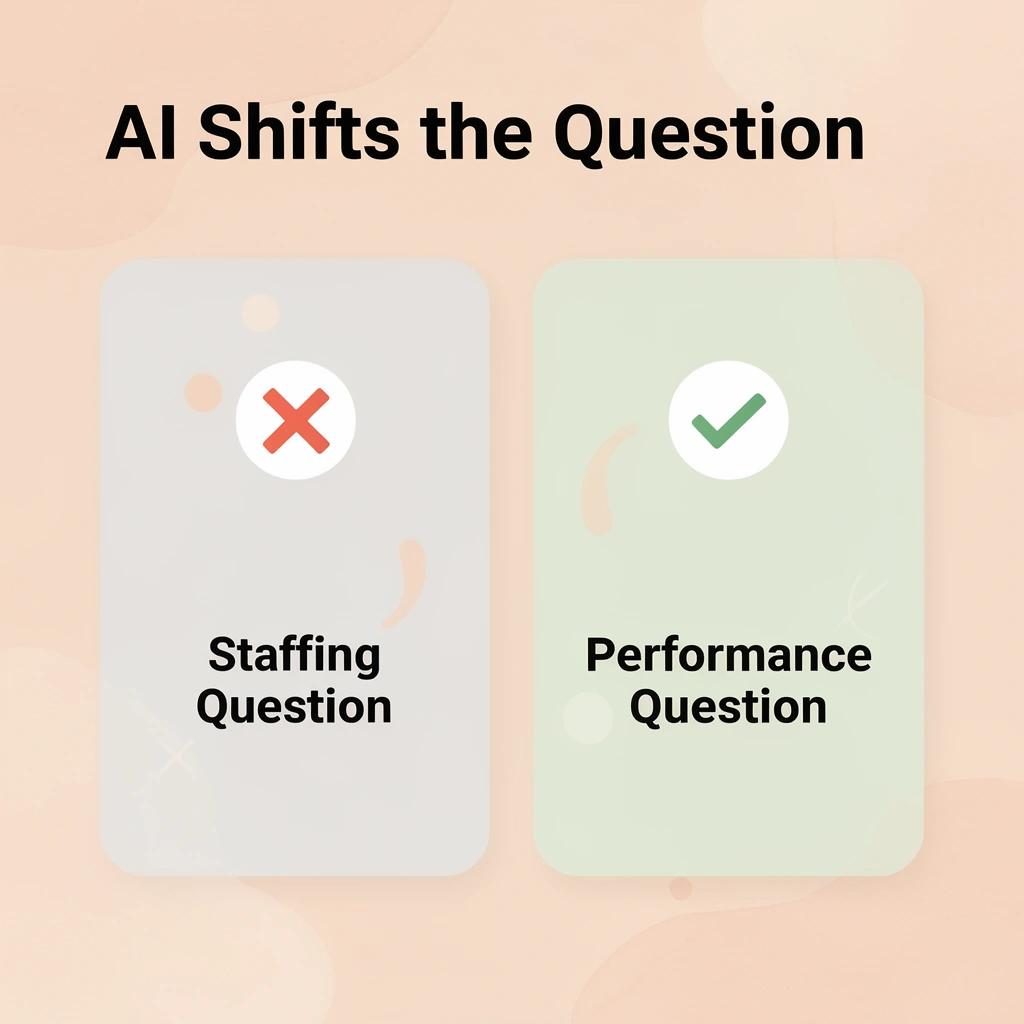
AI has made law clerks more capable, not more replaceable. This changes how we think about technology adoption from a staffing question to a performance question — a critical distinction that reshapes how legal teams invest in talent and deploy tools.
"AI has shifted the conversation around legal support roles from replacement to empowerment — transforming what a skilled law clerk can accomplish in a single day."
💡 Tip: When evaluating AI tools for your legal team, ask not "Can this replace a clerk?" but "How much does this amplify what our clerks can already do?"
🔑 Takeaway: The real value of AI in legal workflows isn't headcount reduction — it's performance elevation, enabling law clerks to handle more complex tasks, deliver faster turnarounds, and produce higher-quality research than ever before.
- Staffing vs. Performance: Move from viewing the presence of AI as a staffing headcount concern to focusing on how it elevates the quality and velocity of output.
- Replacement vs. Empowerment: Shift the narrative from "Can AI replace clerks?" to "How does AI empower clerks?" to achieve higher-level legal analysis.
- Cost vs. Capability: Transition from a cost-reduction mindset to one centered on capability expansion, using AI to handle complex tasks that were previously too time-consuming.
- Threat vs. Leverage: Stop viewing technology as a disruptive threat and start utilizing it as strategic leverage to gain a competitive advantage in research and drafting.
What changes when volume is no longer the bottleneck
Traditional clerk workflows stalled due to time constraints. A clerk researching complex statutory interpretation might spend two full days building a foundation that AI now assembles in minutes. According to a randomized study reviewed by the Law and Economics Center, law students using AI tools completed legal assignments 50% to 130% faster, with measurable improvements in document clarity and analytical depth. The shift matters because clerks move upstream into reasoning, risk assessment, and judgment calls that no algorithm can make.
Why does a law clerk still need to verify AI research?
Speed without accountability creates a false sense of completeness. AI research tools can surface a case that looks directly on point but miss a subsequent ruling that limits its reach, or flag a statute without the jurisdiction-specific exception that changes everything. Clerks trained in legal analysis catch those gaps. Thomson Reuters data shows legal teams using AI cut document review and drafting times by up to 63%, with 85% reporting deeper insights than manual methods alone. Those gains hold only when a skilled human treats AI output as a starting draft rather than a finished answer.
How does verified citation tracing protect the law clerk's work?
Clerks today search through multiple databases and manually check citations, risking oversight. This process breaks down in complicated cases where errors are costly. Platforms like OpenCase solve this by verifying every research result against original sources, including Cornell LII, CourtListener, RECAP dockets, and govinfo. For clerks in high-stakes situations where confidentiality matters, tracing information to its source is the professional standard.
The strategic shift nobody anticipated
When clerks are no longer burdened with large workloads, they start helping with strategy. They find arguments people hadn't considered, point out procedural positions that change how cases are filed, and catch mistakes in proposed orders before they reach the judge. A 2025 survey found that 77% of legal professionals now use AI for document review and 74% for research, meaning clerks in those environments spend more time on analysis and judgment rather than retrieval and formatting. This represents a fundamentally different and more valuable job description.
The compliance layer most teams overlook
Legal teams often underweight governance when adopting AI. Chambers and law firms regularly handle privileged communications, sealed filings, and sensitive client data. The AI tools that clerks use must meet the same confidentiality standards the profession requires.
Why should a law clerk care about enterprise-grade security standards?
Enterprise-grade security—SOC 2 Type II compliance and ISO/IEC 27001 certification—is not a technical checkbox. It is the baseline for responsible adoption in a field where a single data exposure can compromise a case, a client relationship, or a career. Clerks who understand this are better positioned to advocate for tools that meet the bar, rather than defaulting to whatever is fastest or most familiar.
What "meeting the bar" looks like in practice proves more specific than most expect.
Related Reading
- Lawyer Salary
- Iolta Account
- Legal Billing Software
- Objections In Court
- Is ChatGPT Good For Personal Injury Lawyers
- Law Firm Marketing
- Will Lawyers Be Replaced By Ai
- Billable Meaning
- Legal Ai Tools
- How To Use ChatGPT for Legal Research
- Law Firm Seo
10 Key Law Clerk Responsibilities in Modern Legal Practice
Law clerks are essential to successful legal teams. They conduct legal research, analyze complex issues, draft documents, verify authorities, and help attorneys prepare stronger cases while making sure work stays accurate, on time, and organized.
"Law clerks conduct legal research, analyze complex issues, draft documents, verify authorities, and help attorneys prepare stronger cases — making them indispensable to modern legal practice." — Legal Practice Overview
🎯 Key Point: Law clerks are not just support staff — they are core contributors to case accuracy, document quality, and overall legal outcomes.
🔑 Takeaway: From legal research to drafting documents and verifying authorities, law clerks handle critical responsibilities that directly impact whether a legal team wins or loses.
- Legal Research: Deep dives into statutes and precedents build the stronger case foundations necessary for successful litigation.
- Analyzing Complex Issues: Carefully breaking down multifaceted legal problems sharpens the attorney's overall strategy and anticipates opposing arguments.
- Drafting Documents: Precise, well-structured writing ensures accuracy and clarity, allowing the attorney to present compelling arguments to the court.
- Verifying Authorities: Rigorous fact-checking and citation validation prevent costly legal errors that could undermine a client's position.
- Case Preparation Support: Meticulous document and timeline management keeps work on time and organized, allowing the legal team to focus on high-level advocacy.

1. Conducting Comprehensive Legal Research
Law clerks conduct thorough searches of case law, statutes, regulations, and secondary sources using advanced databases such as Westlaw and LexisNexis, as well as AI-assisted tools. They identify relevant precedents, distinguish controlling authority from persuasive decisions, and uncover emerging trends in specific practice areas. This work encompasses cross-jurisdictional review, analysis of factual similarities, and preparation of detailed reports outlining potential arguments and weaknesses.
2. Drafting Legal Documents and Memoranda
Clerks prepare first drafts of bench memos, judicial orders, opinions, motions, and briefs using precise legal language tailored to the audience and procedural requirements. They organize arguments logically, include verified citations, and ensure compliance with court rules or firm standards. This responsibility allows senior professionals to focus on final review and revision rather than starting from scratch.
3. Assisting with Case Preparation and Trial Support
Clerks organize evidence, summarize discovery materials, prepare witness outlines, and help develop trial strategies by identifying key themes and potential objections. In courtroom settings, they manage exhibits, take notes on proceedings, and provide real-time research on unexpected issues. This involvement ensures smooth execution and strengthens the team's readiness for presentations before judges or opposing counsel.
4. Reviewing and Cite-Checking Documents
Clerks check citations, verify facts, and review drafts to identify and correct errors that could damage credibility or cause procedural problems. They compare sources against official reporters and flag inconsistencies in legal reasoning. This quality-control step preserves the integrity of filed materials and prevents costly revisions or sanctions.
5. Managing Case Files and Administrative Duties
Clerks maintain organized physical and electronic files, track deadlines through docketing systems, and handle correspondence about schedules and procedural matters. They update calendars, coordinate with court staff, and ensure filing requirements are met across jurisdictions. These tasks prevent missed deadlines and enable legal teams to manage multiple cases efficiently.
6. Summarizing Records and Preparing Bench Briefs
Law clerks break down long transcripts, pleadings, and exhibits into short summaries that capture important facts, procedural history, and legal issues. They create bench briefs that outline arguments from both sides, recommend solutions based on applicable law, and identify missing evidence. This preparation readies judges for hearings or deliberations and ensures they consider all relevant details.
7. Communicating with Parties and Court Personnel
Clerks work as professional intermediaries by answering questions, explaining procedures, and helping organize hearings or filings while maintaining strict confidentiality. They write clear letters and facilitate information sharing between judges' offices, lawyers, and parties involved in cases. Clear communication prevents misunderstandings, helps people comply with court orders, and resolves administrative problems.
8. Supporting Appellate and Opinion Writing Processes
Clerks analyze appellate records, research standards of review, and help draft detailed opinions addressing the parties' arguments with clear reasoning and citations. They examine how decisions might affect past court rulings and suggest changes to ensure opinions withstand scrutiny. This support shapes court decisions that guide the wider legal community.
9. Utilizing Technology and Legal Research Tools
Modern clerks learn to use e-discovery platforms, case management software, and AI-enhanced research tools. These tools enable them to process large volumes of documents quickly and identify critical information. Proficiency with these tools increases clerk productivity, supports data-driven recommendations, and keeps legal teams competitive in technology-dependent practice environments.
10. Maintaining Confidentiality and Ethical Standards
Clerks protect sensitive case information, avoid conflicts of interest, and follow judicial codes of conduct. They exercise sound judgment in communications and understand limits regarding ex parte contacts and outside discussions. This commitment preserves public trust in the judicial process, protects client and party privacy, and maintains the professional reputation of the chambers or firm.
Best Practices for Excelling as a Modern Law Clerk
Successful law clerks combine essential pillars of professional excellence: legal knowledge, good judgment, technical skills, and excellent organization. Following proven best practices strengthens both day-to-day performance and long-term career growth.
"The most effective law clerks don't just understand the law — they master the habits, systems, and judgment that transform legal knowledge into exceptional courtroom support." — Legal Career Development Insight
🎯 Key Point: Legal knowledge alone is not enough — the clerks who truly excel are those who pair sharp analytical skills with strong organizational systems and sound professional judgment.
- Legal Knowledge: Forms the essential foundation for accurate research, sophisticated drafting, and precise case analysis.
- Good Judgment: Acts as the primary filter for navigating critical decisions when faced with high-stakes pressure and legal ambiguity.
- Technical Skills: Drives operational efficiency by leveraging modern legal tools and platforms to automate routine tasks.
- Excellent Organization: Provides the necessary structure to manage complex, high-volume caseloads without missing deadlines or critical details.
💡 Tip: Treat best practices not as a checklist, but as a living framework — revisit and refine your approach regularly to ensure continuous professional growth throughout your clerkship.

Master Advanced Legal Research Techniques
Successful law clerks develop strategies to cross-reference multiple jurisdictions, analyze trends in case law, and integrate secondary sources for complete insights. They stay current with evolving tools and methods to accelerate the identification of relevant authorities while carefully evaluating the importance and utility of the findings. This skill produces focused memoranda that anticipate questions and strengthen case strategy in both litigation and transactional settings.
Prioritize Precision in Drafting and Editing
Top performers treat every document as a reflection of their chambers' or firms' standards by focusing on clear structure, accurate citations, and concise language that align with their supervisors' preferences. They build habits of reviewing their work multiple times and checking facts systematically to remove errors before submission, resulting in polished work that requires minimal revision.
Cultivate Strong Organizational Systems
Good law clerks track deadlines, filings, and case materials through digital calendars and custom workflows. They maintain organized files and anticipate case requirements to prevent errors. This dependability enables legal teams to function effectively during demanding periods.
Seek Feedback and Adapt Proactively
Great clerks ask for feedback early and often, and they quickly use suggestions to improve their skills. They observe how things work in the office and adjust their work to match what individual judges or lawyers prefer. This helps them learn faster and builds trust with the people they work with. They observe chamber dynamics and adjust approaches to match individual judges' or attorneys' styles, accelerating professional development and building trust within the team.
Uphold the Highest Ethical Standards
Great clerks treat confidentiality and fairness as essential. They carefully manage sensitive information, avoid impropriety, learn applicable rules of conduct, and make sound decisions in ambiguous situations. This protects the integrity of the judicial or firm process and earns lasting respect from colleagues and superiors.
Embrace Technology to Boost Efficiency
Modern law clerks use specialized platforms like OpenCase to streamline research, document management, and teamwork while ensuring the accuracy of output. These tools integrate with practice management systems such as Clio and support drafting directly in Microsoft Word or Google Docs using trusted legal datasets. This capability frees time for advanced analysis and keeps clerks current with evolving legal workflows.
Build Positive Working Relationships
Good clerks communicate clearly and respectfully with other clerks, court staff, and lawyers to collaborate effectively and share information smoothly. They contribute to team situations and support colleagues during busy periods. These relationships improve daily work and facilitate career growth long after the clerkship ends.
Develop Time Management and Adaptability
Great clerks handle changing priorities by setting realistic daily goals, grouping similar tasks together, and staying flexible when urgent matters arise. They balance thorough work with efficiency across different assignments, maintaining consistent performance without compromising quality.
Pursue Continuous Learning and Self-Improvement
Committed clerks regularly review new legal developments, attend relevant trainings, and reflect on completed assignments to identify growth areas. They read sample opinions or briefs from their judge or firm to improve their personal style and expand their subject matter knowledge.
Maintain Professionalism and Work-Life Balance
Good clerks demonstrate reliability through punctuality, appropriate dress, and composure. They understand that adequate rest and boundaries on personal time prevent burnout during busy periods and enable their best work.
How OpenCase Helps Law Clerks Work Faster and More Accurately
"Meeting the bar" comes down to something concrete: where does the information come from, and can you trace it back? Every citation, statutory reference, and case citation lives or dies on that answer.
💡 Tip: Before submitting any memo, ask yourself: can every claim in this document be traced to a verified, current source? If not, the work isn't done.
"The integrity of legal work is only as strong as the traceability of its sources. A single unverified citation can unravel an otherwise airtight argument." — Legal Research Best Practices

Law clerks working through fragmented sources know the anxiety of final verification. You have a statute, a circuit opinion, maybe an authoritative secondary source. But you cannot confirm whether the statute reflects the latest amendment or whether the circuit opinion was subsequently distinguished. That uncertainty travels with the memo you submit — and it carries real professional risk.
⚠️ Warning: Submitting a memo with unverified statutory currency or unchecked subsequent history is one of the most common — and most avoidable — errors in legal drafting.
🎯 Key Point: OpenCase eliminates this uncertainty by giving law clerks real-time source verification, amendment tracking, and subsequent history checks — all in a single workflow, so nothing slips through before submission.
- Statutory Currency: Move from manual cross-referencing across multiple databases to automated flagging that instantly alerts you if a statute is outdated.
- Circuit Opinion History: Eliminate the need for separate, disconnected lookups by providing integrated subsequent history directly alongside the opinion.
- Secondary Source Authority: Replace reliance on individual researcher judgment with instantly surfaced credibility metrics, allowing for faster evaluation of persuasive authority.
- Final Memo Confidence: Transition from lingering uncertainty and anxiety about missed updates to a verified, fully traceable audit trail for every research point.
Where fragmented research creates real risk
The failure point is usually not the initial search, but the verification step that follows: cross-referencing multiple databases, checking for subsequent history, and confirming primary sources are current. Most clerks toggle between a general search engine, a government website, and a subscription database, each with its own update schedule, coverage gaps, and interface logic. The result is a workflow that is slower than it appears and more error-prone than anyone acknowledges.
How does deadline pressure compound the cost for a law clerk?
That friction worsens under deadline pressure. A clerk drafting a motion in Microsoft Word constantly leaves the document to verify citations, then returns to paste them in. According to research published by McKinsey Global Institute in 2023, knowledge workers lose roughly 19 percent of their working week to searching for and gathering information. For a law clerk whose output is almost entirely information-dependent, that difference is substantial: the gap between a thorough memo and a rushed one.
How does embedded research keep a law clerk inside the document?
OpenCase solves this problem by embedding verified legal research directly into Microsoft Word and Google Docs. It pulls information from Cornell LII's trusted datasets, federal and state court decisions updated daily, and RECAP dockets. A clerk can find a verified primary source, confirm it remains current, and add the citation without leaving the document. Research and writing flow uninterrupted.
How does unverified sourcing slow a law clerk down?
Going fast without tracking information sources isn't faster when you must fix mistakes later. Unverifiable sources require rechecking. A law pulled from an unofficial website needs confirmation. Every unverified research step adds time later, when you need it least. OpenCase's Sources Portal solves this by making every result traceable to its primary record, so clerks get information they can use without a second verification.
Where does a law clerk gain the most from connected systems?
Case and document management follow the same logic. Clerks coordinating across PACER dockets, Clio matters, Google Drive folders, and email attachments work with tools never designed to communicate. When those systems connect into a single workspace, retrieval time drops and time available for analysis increases. That shift is where quality gains live: not in the search, but in what a clerk can do once searching stops.
When that standard of precision applies to the full arc of a legal matter, from the first research query to the final submitted draft, the impact proves more significant than most clerks expect.
Try our Legal AI to Support your Legal Work from Research to Final Draft
Legal work requires complete traceability from research to final draft. This is the professional standard clerks are held to, with no room for gaps in sourcing, security, or judgment.
"Legal work demands complete traceability: from the first research query to the final draft. No gaps. No exceptions." — Professional Legal Standard
🎯 Key Point: Traceability is the baseline expectation for every clerk, associate, and practitioner handling live matters.

OpenCase brings together this entire workflow in a single workspace, pulling verified citations from Cornell LII, CourtListener, RECAP dockets, and govinfo while connecting directly to existing drafting tools. Built for legal confidentiality with SOC 2 Type II compliance and ISO 42001-aligned AI governance, it includes responsible adoption from the start.
- Cornell LII & govinfo: Provides reliable access to verified primary legal sources like the U.S. Code, Supreme Court opinions, and federal regulations.Wikipedia
- CourtListener & RECAP: Offers live docket and case law access by aggregating millions of documents from PACER, ensuring transparency and free public availability.UBalt Blogs
- SOC 2 Type II Compliance: Ensures enterprise-grade data security by auditing internal controls over an extended period to protect sensitive information.Everpure
- ISO 42001 AI Governance: Establishes a framework for responsible, auditable AI use that manages risks such as bias and accountability while fostering innovation.KPMG International
- Single Workspace: Consolidates research and drafting into one platform, eliminating context-switching and improving efficiency by keeping tools and files centralized.
💡 Tip: Sign up at opencase.com and connect your tools in minutes — not days.
🔑 Takeaway: OpenCase is the only platform that combines verified citation sourcing, SOC 2 Type II security, and ISO 42001-aligned AI governance in a single, ready-to-use legal workspace.
Related Reading
- Best Ai Contract Review Tool
- Spellbook
- Everlaw
- Harvey
- Law Insider
- Ivo
- Clio
- Legora
- ChatGPT For Lawyers